The Nigerian automotive market, a dynamic and ever-evolving landscape, stands at a pivotal juncture in 2025. As Africa’s most populous nation, Nigeria presents a unique blend of challenges and opportunities for vehicle manufacturers, distributors, and consumers alike. From economic headwinds to the burgeoning interest in electric vehicles and the enduring dominance of the used car market, understanding the intricacies of this sector is crucial for anyone looking to navigate its future. This blog post delves into the key trends, forecasts, and influential factors shaping the Nigerian automotive industry in 2025 and beyond, providing a comprehensive overview for enthusiasts, investors, and policymakers.
The Economic Landscape and Its Impact on the Automotive Market
Nigeria’s economic environment in 2025 continues to exert significant influence on its automotive sector. The economy is projected for a modest growth of 3.3% [1], a figure that, while positive, is tempered by persistent challenges. High inflation, which reached 34.8% at the end of 2024, coupled with a substantial 42.1% depreciation of the naira, has severely strained household purchasing power and business operations [1].
Consumer spending, particularly on non-essential goods like new vehicles, remains under considerable pressure. The Central Bank’s tight monetary stance, evidenced by interest rates pushed to 27.5%, has further increased borrowing costs, discouraging large-scale investments within the automotive industry [1].
This economic climate directly contributed to a significant contraction in the Nigerian vehicle market, which saw a 22.3% year-on-year drop in Q1 2025. Monthly figures reveal a fluctuating but generally downward trend, with January experiencing a 25.3% loss, February a brief ease to 12.1%, and March a further decline of 27.7% [1]. This indicates a challenging year ahead for new car sales.
New Car Market Trends and Brand Performance
Despite the overall market contraction, some brands have demonstrated resilience. In Q1 2025, Toyota maintained its leadership position, though experiencing a 13.7% decline. Innoson, a local manufacturer, climbed to second place with a 10.5% decrease in sales. Hyundai, however, dropped to third, with a 22.4% loss. Notably, MG emerged as the only brand within the top ten to report growth, achieving an impressive 74.5% increase and moving up three spots to fourth place [1]. This highlights a shifting competitive landscape where affordability and perhaps new models are gaining traction amidst economic difficulties.
The Electric Vehicle (EV) Market: A Slow but Steady Charge
The push for electric vehicles in Nigeria is a significant, albeit challenging, trend. The National Automotive Design and Development Council (NADDC) has set an ambitious goal for 30% of passenger cars to be electric-powered by 2025 [2]. However, the reality on the ground in Q1 2025 shows the EV market struggling to gain significant traction, experiencing a 25.9% loss and remaining below 1% of total vehicle sales [1].
The primary hurdles for EV adoption include inadequate charging infrastructure and the higher upfront cost of electric vehicles, largely due to battery expenses [2]. Despite these challenges, there are clear indicators of future growth. Chinese companies are actively investing in Nigeria’s lithium and EV sectors, with plans to establish EV manufacturing plants in the country [2]. The official launch of BYD Electric Cars in Nigeria in April 2025 further signals growing interest and availability [2]. Forecasts suggest the Nigerian Electric Vehicle Market is projected to grow at a Compound Annual Growth Rate (CAGR) of 6.8% between 2025 and 2031 [2]. This indicates a slow but steady charge towards an electrified future, driven by government initiatives and foreign investment.
The Enduring Dominance of the Used Car Market
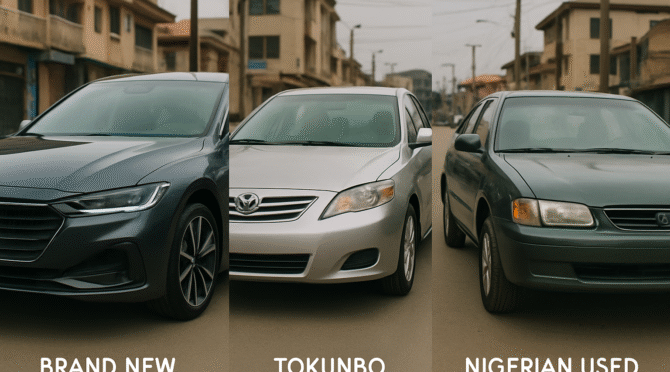
The used car market in Nigeria continues to be a dominant force, driven by economic realities and consumer preferences. Estimated at USD 1.24 billion in 2025, this segment is projected to reach USD 1.90 billion by 2030, exhibiting a robust CAGR of 8.9% [2]. The preference for imported used cars, often referred to as “Tokunbos,” is a key driver, alongside the increasing popularity of online auto platforms [2].
The rising prices of new vehicles, exacerbated by naira devaluation and higher import exchange rates, have pushed many consumers towards the more affordable used car options. High inflation further contributes to this trend, making new car purchases less feasible for a significant portion of the population [2].
However, the used car market is not without its challenges. A significant hike in tariffs by the Nigerian Customs Service has led to an almost 100% increase in the price of Tokunbo cars as of July 2023. The government’s increased import duty on vehicles, from 39.45% to 39.62% in June 2023, aims to reduce import dependency and promote domestic manufacturing, but it also directly impacts the affordability of used imports [2]. Despite these measures, the used car market is expected to thrive, with a growing preference for SUVs and crossovers, and a notable shift towards online car shopping [2].
Local Manufacturing and Emerging Trends
Nigeria’s automotive industry is actively working towards reducing its reliance on imports through local manufacturing initiatives. The rise of indigenous manufacturers like Innoson is a testament to this effort [2]. Furthermore, there are plans for Nigeria to commence the production of plastic automotive components, a step towards greater self-sufficiency in the supply chain [2]. The recent unveiling of the first off-road electric vehicle, the MHERO 917, in Nigeria in July 2025, signifies a growing capability in advanced vehicle production [2].
Beyond the major market segments, several other trends are shaping the Nigerian automotive landscape. The country’s automotive sector imports have surged to an annual $5 billion, indicating a continued high demand for vehicle parts and components [2]. Foreign manufacturers are increasingly eyeing Nigeria’s burgeoning auto market, as evidenced by their participation in events like the West Africa Automotive Show (WAAS) 2025 [2]. There’s also an increasing demand for original equipment in the auto parts and accessories market, reflecting a focus on quality and durability [2].
Conclusion
The Nigerian automotive market in 2025 is a complex interplay of economic pressures, evolving consumer preferences, and strategic industry developments. While economic headwinds continue to challenge new car sales, the robust growth of the used car market and the nascent but promising electric vehicle sector offer significant opportunities. Local manufacturing initiatives and increasing foreign investment signal a long-term vision for a more self-reliant and technologically advanced automotive industry in Nigeria. Navigating this landscape requires a deep understanding of these trends and a flexible approach to capitalize on the emerging opportunities.
Image Suggestions
Image 1: Nigerian New Car Market
Image 2: Electric Vehicle Charging Station
Caption: A solar-powered electric vehicle charging station in Nigeria, highlighting efforts to build sustainable infrastructure for the nascent EV market.
Image 3: Used Car Market in Nigeria
Caption: A bustling used car lot in Nigeria, illustrating the continued dominance and high demand for pre-owned vehicles in the automotive landscape.
Image 4: Local Automotive Assembly Plant
Caption: An interior view of a local automotive assembly plant in Nigeria, symbolizing the nation’s drive towards self-sufficiency and industrialization in the automotive sector.