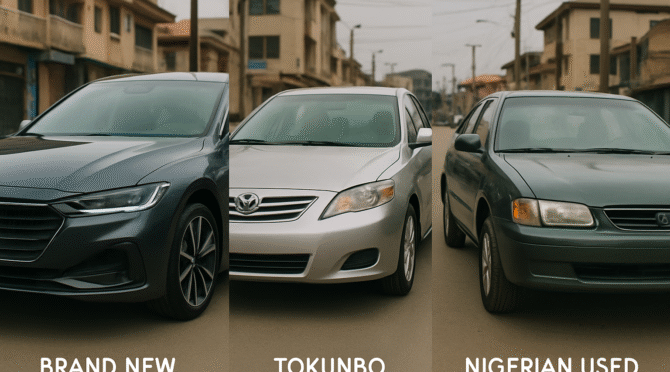
Buying a car in Nigeria is a significant investment, and for many, it’s not just about getting from point A to point B. The decision often involves considering the future value of the vehicle, especially in a dynamic market like Nigeria’s. The concept of ‘resale value’ is paramount, as it determines how much of your initial investment you can recoup when it’s time to sell or upgrade. In a country where used cars, often referred to as ‘tokunbo,’ dominate the market, understanding what influences a car’s depreciation or appreciation is crucial for making a smart financial decision.
This blog post will delve into the critical factors that impact the resale value of cars in Nigeria, highlight brands that tend to hold their value, and caution against those that depreciate rapidly. By the end of this guide, you’ll be equipped with the knowledge to make an informed purchase that not only meets your transportation needs but also offers a favorable return on investment.
Factors Affecting Car Resale Value in Nigeria
Several interconnected factors influence a car’s resale value in the Nigerian market. Understanding these can help prospective buyers make more informed decisions:
1. Brand Reputation and Popularity
In Nigeria, certain car brands have built a strong reputation for reliability, durability, and ease of maintenance. These brands consistently command higher resale values. Toyota and Honda, for instance, are perennial favorites due to their perceived robustness and the widespread availability of spare parts and skilled mechanics. The popularity of a brand often translates directly into higher demand in the used car market, thus bolstering its resale value.
2. Availability of Spare Parts and Maintenance Costs
This is perhaps one of the most critical factors in the Nigerian context. Cars with readily available and affordable spare parts will always have a better resale value. Conversely, vehicles with scarce or expensive parts, particularly those that need to be imported, will see their value plummet. High maintenance costs, often associated with luxury European brands like BMW, Mercedes-Benz, Audi, and Jaguar/Land Rover, significantly deter potential second-hand buyers once the warranty expires [1]. The cost of repairs can quickly outweigh the car’s market value, making them a financial burden.
3. Fuel Efficiency
With fluctuating and often high fuel prices in Nigeria, fuel efficiency is a major consideration for car buyers. Vehicles that offer better mileage per liter are more attractive and thus retain their value better. This often favors smaller engine capacities and more economical models, as they promise lower running costs over time [2].
4. Condition, Age, and Mileage
The physical and mechanical condition of a car, its age, and its mileage are universal determinants of resale value. A well-maintained car with a clean service history, lower mileage, and minimal wear and tear will naturally fetch a higher price. While age generally leads to depreciation, exceptionally well-maintained vintage cars can sometimes be an exception [3].
5. Market Demand and Trends
Local market demand plays a significant role. Some car models and types are simply more popular than others. For example, SUVs and crossover vehicles have seen a growing demand in Nigeria, influencing their resale values [4]. Economic conditions, such as the fluctuating exchange rates and inflation, also impact the used car market, sometimes leading to an increase in used car prices as new cars become less affordable [5].
6. Mechanic Familiarity
In a market where informal mechanics play a crucial role, the familiarity of local technicians with a particular car brand or model can significantly affect its resale value. Cars that are complex or require specialized tools and knowledge for repairs, such as some high-end European models, are less appealing to the average Nigerian buyer due to the difficulty and cost of finding competent repair services [1].
Cars with Good Resale Value in Nigeria
Certain car brands consistently demonstrate strong resale value in the Nigerian market, primarily due to their reliability, affordability of parts, and widespread acceptance. When considering a purchase, these brands often represent a safer investment:
•Toyota: Unsurprisingly, Toyota consistently tops the list for resale value in Nigeria. Models like the Corolla, Camry, and Highlander are highly sought after due to their exceptional durability, fuel efficiency, and the extensive network for spare parts and maintenance across the country [3].
•Honda: Another Japanese powerhouse, Honda vehicles such as the Accord, Civic, and CR-V are known for their quality, comfort, performance, and longevity. They are a solid investment in the Nigerian market, appealing to a broad range of buyers [3].
•Lexus: As Toyota’s luxury division, Lexus cars (e.g., RX, LX, ES) are gaining significant traction in Nigeria’s used car market. They offer a blend of luxury, performance, and reliability, making them attractive to those seeking premium features without the steep depreciation often associated with other luxury brands [3].
•Mercedes-Benz: While maintenance can be higher than Japanese counterparts, Mercedes-Benz models like the C-Class and E-Class still retain good value, particularly as status symbols. Their reputation for luxury, performance, and safety ensures a steady demand among the upper-class segment [3].
•Hyundai and Kia: These South Korean brands have seen a surge in popularity due to their affordability, modern features, and increasingly accessible spare parts. Models like the Hyundai Elantra, Tucson, and Kia Rio, Sportage, and Sorento offer good value for money and are becoming more recognized for their reliability [3].
•Ford: Ford, particularly its rugged SUVs like the F-150, Ranger, Edge, and Explorer, holds decent resale value. Their durability and suitability for Nigeria’s diverse terrains contribute to their appeal [3].
Cars with Poor Resale Value in Nigeria
While some cars hold their value well, others depreciate rapidly, becoming financial liabilities for their owners. In Nigeria, certain brands and models are notorious for having poor resale value, primarily due to high maintenance costs, scarcity of parts, or a lack of mechanic familiarity [1]:
•BMW: Despite their luxury and performance, BMWs often become a financial burden once their warranty expires. Common issues like electrical problems, timing chain failures, and the high cost of specialized parts and repairs significantly weaken their second-hand value. Models such as the 2001–2006 X5 V8, 2008–2010 X6, and 2002–2008 7 Series are particularly known for reliability issues [1].
•Pontiac: As a discontinued brand (since 2010), Pontiac vehicles suffer from low market demand and severe parts availability issues in Nigeria. Owning a Pontiac can be a challenging experience due to the difficulty in finding mechanics familiar with the brand and sourcing spare parts [1].
•Jaguar / Land Rover: These brands offer prestige but are plagued by frequent and expensive maintenance issues, including air suspension failure, timing chain problems, and overheating. Models like the LR2, LR3, and 2001–2005 Range Rover Vogue are known for their temperamental nature and high cost of ownership, which drastically impacts their resale value [1].
•Audi: Often seen as a stylish alternative, Audi vehicles can be costly to maintain due to expensive parts and complex engine repairs, especially timing chain replacements that require full engine removal. This significantly deters potential second-hand buyers once the car is out of warranty [1].
•Nissan: While once known for durability, Nissan’s reputation in Nigeria has been significantly impacted by widespread issues with its Continuously Variable Transmissions (CVTs). The high cost of transmission replacement and declining consumer confidence have led to drastically lowered resale values for models like the Murano, Altima, and Rogue from the mid-2000s onwards [1].
Conclusion
Making an informed decision when buying a car in Nigeria goes beyond the initial purchase price. The resale value of your vehicle can significantly impact your long-term financial well-being. By prioritizing factors such as brand reputation, availability of spare parts, fuel efficiency, and mechanic familiarity, you can make a choice that not only serves your immediate transportation needs but also proves to be a sound investment.
Opting for brands like Toyota, Honda, and Lexus, known for their reliability and ease of maintenance, generally leads to a better return on investment. Conversely, exercising caution with brands like BMW, Pontiac, Jaguar/Land Rover, Audi, and certain Nissan models, which are often associated with high maintenance costs and rapid depreciation in the Nigerian market, can save you from future financial burdens. Always consider the full cost of ownership and the car’s potential future value before making your final decision.
References
Image: Factors Affecting Resale Value