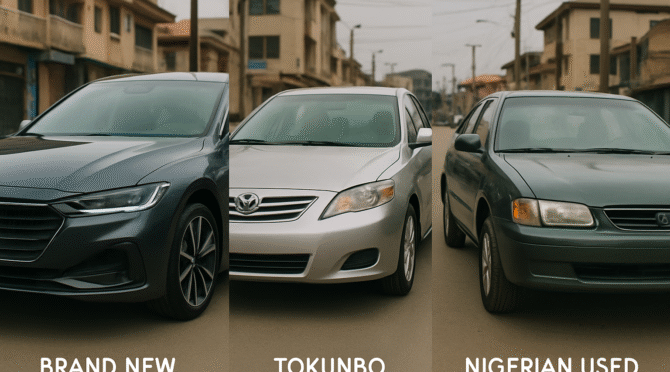
Nigeria, Africa’s most populous nation, has a vibrant and dynamic automotive market. However, a critical factor constantly reshaping this landscape is the fluctuating exchange rate of the Nigerian Naira against major international currencies, particularly the US Dollar. For many Nigerians, owning a car is not just a luxury but a necessity, facilitating daily commutes, business operations, and personal mobility. Yet, the dream of car ownership has become increasingly challenging due to the direct and profound impact of exchange rate volatility on vehicle prices.
This blog post delves into the intricate relationship between Nigeria’s exchange rate fluctuations and the cost of cars. We will explore how the depreciation of the Naira inflates import duties, drives up the prices of both new and foreign-used (popularly known as ‘tokunbo’) vehicles, and consequently shifts consumer preferences towards more affordable, locally used alternatives. By understanding these dynamics, we can better grasp the economic realities faced by car buyers and the broader implications for Nigeria’s automotive industry.
The Naira’s Turbulent Journey and Its Immediate Impact on Car Prices
The Nigerian Naira has experienced a turbulent journey over the past few years, marked by significant depreciation against the US Dollar. This devaluation is not merely an abstract economic concept; it has tangible, everyday consequences, especially for a country heavily reliant on imports, such as vehicles. The automotive sector, in particular, bears the brunt of this volatility, as most vehicles, whether brand new or foreign-used, are imported.
According to data, the Naira has seen a substantial weakening, with the exchange rate to the dollar reaching as high as N1462.59/$ in the Nigerian autonomous foreign exchange market (NAFEM) as of May 22, 2024 [1]. This represents a drastic shift from previous years, where the rate was considerably lower. For instance, in 2019, the exchange rate was around N470 per dollar, and a decade ago, it was N168 per dollar [1, 2]. This continuous depreciation directly translates into higher landing costs for imported cars.
Consider the example of a 2005 Toyota Corolla. In 2015, a foreign-used model on the Jiji platform cost approximately N1.9 million. By May 2024, the price for a similar vehicle had skyrocketed to over N6.5 million [1]. This exponential increase is a direct reflection of the Naira’s diminished purchasing power. Similarly, the cost of clearing imported vehicles at Nigerian ports has quadrupled. A car dealer noted that clearing a Toyota Corolla, which once cost N450,000-N480,000, now costs around N3 million [3]. These increased customs duties, coupled with the higher cost of foreign exchange, are directly passed on to the consumer, making cars significantly more expensive.
The Role of Import Policies and Customs Duties
Beyond the direct exchange rate, government policies and customs duties play a crucial role in determining car prices. Nigeria imposes various tariffs and levies on imported vehicles, including a 35% import duty and a 35% levy, in addition to a 15% National Automotive Council (NAC) levy on imported used cars [4, 5]. The implementation of the Vehicle Identification Number (VIN) valuation policy has further exacerbated the situation, leading to higher tariffs and increased costs for importers [1].
These policies, while intended to encourage local automotive production, inadvertently make imported vehicles prohibitively expensive. The combined effect of a depreciating Naira and escalating import duties has led to a significant drop in car imports. In 2024, passenger car imports into Nigeria dropped by 14.2 percent to N1.26 trillion from N1.47 trillion in 2023 [3]. This decline underscores the severe impact of the foreign exchange crisis on the automotive supply chain.
Figure 1: Illustrative representation of Naira to Dollar exchange rate fluctuations.
Shifting Consumer Behavior: The Rise of Locally Used Cars
The soaring prices of new and foreign-used cars have inevitably led to a significant shift in consumer behavior within the Nigerian automotive market. With imported options becoming increasingly unaffordable, Nigerians are now turning to locally used alternatives to meet their mobility needs [1]. This segment of the market has become the biggest beneficiary of the foreign exchange crisis.
For instance, while a foreign-used 2005 Toyota Corolla saw its price jump from N1.9 million to over N6.5 million, its Nigerian-used counterpart, which cost N1.2 million in 2015, now ranges between N3 and N3.5 million [1]. This stark difference in pricing has made locally used cars a more viable option for many. Car dealers, like Adedayo Oyewole, have even shifted their focus entirely to selling Nigerian used cars due to the low demand for imported ones [1].
The demand for locally used cars is further fueled by the high cost of clearing imported vehicles and the general economic hardship. The middle class, traditionally a key demographic for car purchases, is being priced out of the market, leading to a situation where car sales are increasingly concentrated among the wealthy and those with alternative income sources [3]. This trend highlights a fundamental change in the market dynamics, where affordability trumps the desire for imported vehicles.
Figure 2: A typical car dealership in Nigeria, showcasing a variety of used vehicles.
Broader Economic Implications and the Road Ahead
The impact of exchange rate fluctuations on car prices in Nigeria extends beyond individual purchasing decisions; it has broader implications for the nation’s economy. The automotive sector is a significant contributor to employment and economic activity, and its struggles due to currency volatility can have a ripple effect across various industries.
The decline in car imports, as evidenced by the 14.2% drop in 2024, affects government revenue from customs duties and taxes [3]. It also impacts businesses involved in car sales, maintenance, and spare parts, leading to potential job losses and reduced economic growth. Furthermore, the shift towards older, locally used vehicles might raise concerns about vehicle safety, environmental impact, and the overall quality of the national car fleet.
For the Nigerian automotive industry to navigate these challenges, a multi-faceted approach is required. Strengthening the Naira through sound economic policies, diversifying the economy to reduce reliance on imports, and fostering a more stable foreign exchange market are crucial long-term solutions. Additionally, government support for local manufacturing and assembly plants can help reduce dependency on imported vehicles and create a more resilient domestic industry. This could involve incentives for local production, investment in infrastructure, and policies that promote the use of locally sourced materials.
However, the current reality suggests that car prices will likely remain elevated as long as the Naira continues to face depreciation pressures and import policies remain stringent. This necessitates that consumers adapt their purchasing strategies, prioritizing affordability and exploring the growing market for reliable locally used cars.
Conclusion
The relationship between exchange rate fluctuations and car prices in Nigeria is a complex and critical one. The persistent depreciation of the Naira has undeniably driven up the cost of both new and foreign-used vehicles, making car ownership a distant dream for many. This economic reality has forced a significant pivot in consumer behavior, with a growing preference for more affordable, locally used cars.
While the challenges posed by currency volatility and stringent import policies are substantial, they also present an opportunity for the growth of Nigeria’s domestic automotive industry. A stable economic environment, coupled with supportive government policies and increased investment in local manufacturing, could pave the way for a more self-sufficient and resilient automotive sector. Until then, understanding these dynamics remains crucial for anyone navigating the Nigerian car market.
References