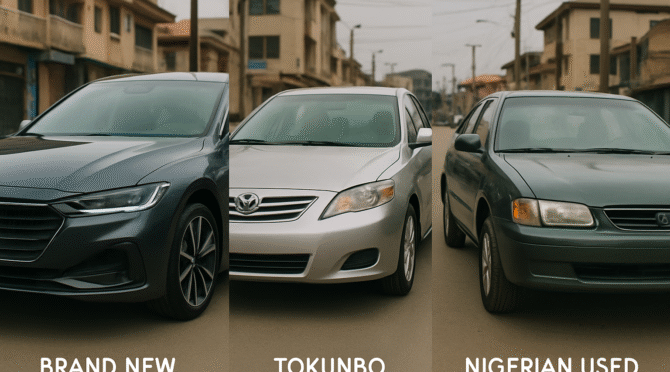
Importing a vehicle into Nigeria can be a complex process, fraught with regulations, duties, and ever-changing policies. For individuals and businesses alike, a thorough understanding of these policies is not just beneficial, but essential to avoid costly pitfalls, delays, and potential forfeiture of vehicles. This comprehensive guide aims to demystify Nigeria’s vehicle import landscape, providing clarity on the latest regulations, procedures, and crucial considerations for a smooth importation process.
Key Regulations and Policies
Nigeria’s automotive sector is heavily regulated, primarily to encourage local manufacturing and control the influx of older, potentially less roadworthy vehicles. These regulations are subject to periodic review and updates by various government agencies, most notably the Nigeria Customs Service (NCS) and the National Automotive Design and Development Council (NADDC).
Age Limit for Imported Vehicles
One of the most critical aspects of Nigeria’s vehicle import policy is the age restriction on used vehicles. While there has been some variation and discussion over the years, recent reports and guidelines indicate a clear trend towards stricter age limits.
Historically, the age limit for imported used vehicles (often referred to as ‘Tokunbo’ cars) has fluctuated. Some sources indicate an 8-year limit from the date of first registration [3, 15], while others mention 12 years [1, 6] or even 15 years [10, 17] from the year of manufacture. However, more recent updates suggest a tightening of this policy. For instance, some reports from July 2025 indicate that imported cars must now be 10 years old or newer [7, 19]. This stricter stance is part of the government’s efforts to curb the importation of older, high-emission cars and boost the local automotive industry. It is crucial for importers to verify the absolute latest age limit with the Nigeria Customs Service or a reputable clearing agent before initiating any import process, as non-compliance can lead to severe penalties, including seizure.
Import Duties and Levies
The cost of importing a vehicle into Nigeria is significantly impacted by a range of duties and levies imposed by the government. These charges are calculated based on the vehicle’s Cost, Insurance, and Freight (CIF) value. The current import duty structure is substantial and includes:
•Import Duty: Typically 35% of the vehicle’s value [6, 13, 15].
•Levy: An additional 35% levy applies specifically to most imported used cars [6, 13, 15].
•Port Surcharge: A 7% port surcharge [6].
•Value Added Tax (VAT): 5% of the vehicle’s cost, insurance, and freight (CIF) value [6, 15].
This means that the combined duties and levies can amount to a significant percentage of the vehicle’s value, sometimes reaching up to 70% [7, 19]. The Nigeria Customs Service has also introduced a uniform import duty rate based on ex-factory prices [2]. It’s important to note that these rates are subject to change, and importers should always confirm the prevailing rates. For example, in early 2025, there were discussions and initiatives by the NCS to grant waivers and regularize import duties on improperly imported vehicles, indicating ongoing adjustments to policies [5, 14].
Prohibited Imports
Beyond age restrictions, Nigeria also maintains a list of prohibited imports. While the primary focus for vehicles is age, it’s essential to be aware of other potential prohibitions. For instance, right-hand drive vehicles are generally not permitted for import into Nigeria, as the country operates on a left-hand drive system [5, 19]. Salvaged or extensively damaged vehicles might also face severe restrictions or outright prohibition due to safety and environmental concerns. The Nigeria Customs Service website provides a comprehensive import prohibition list, which importers should consult regularly [15].
A car carrier ship at a port, symbolizing vehicle importation into Nigeria.
Step-by-Step Import Process
Importing a vehicle into Nigeria involves a series of well-defined steps, each requiring meticulous attention to detail and adherence to regulatory requirements. Understanding this process is crucial for a seamless experience.
1. Required Documents
Before even considering shipping a vehicle, it is paramount to gather all necessary documentation. These documents are critical for customs clearance and subsequent vehicle registration in Nigeria. Key documents include:
•Commercial Invoice: Details the sale transaction between the seller and the importer.
•Bill of Lading: A document issued by the carrier acknowledging receipt of goods for shipment and serving as a title to the goods.
•Certificate of Origin: Verifies the country where the vehicle was manufactured.
•Customs Declaration Form (Form M): A mandatory document for all imports into Nigeria, obtained from authorized dealer banks.
•Import Permit: Depending on the type of vehicle or specific regulations, an import permit might be required from relevant authorities.
•Vehicle Identification Number (VIN) Verification: The VIN must be verified and match all documentation to prevent discrepancies and delays [1].
•Marine Insurance Policy: Issued by a Nigerian insurance firm, this policy covers potential damages during transit [4].
•Evidence of Payment of VAT: Proof of Value Added Tax payment.
Example of import documentation, crucial for vehicle clearance.
2. Customs Clearance Procedures
Upon the vehicle’s arrival at a Nigerian port (such as Lagos, Apapa, or Tin Can Island), the customs clearance process begins. This involves several stages:
•NCS Inspection: Customs officials will inspect the vehicle to verify its condition, compliance with age limits, and other regulations. This inspection is crucial for assessing the correct duties and levies [1].
•Payment of Duties and Levies: Based on the assessment, the importer must pay the calculated import duty, levy, port surcharge, and VAT. The Nigeria Customs Service has recently introduced a uniform import duty rate based on ex-factory prices, aiming for more transparency [2]. It’s important to be aware of any ongoing initiatives, such as the 90-day window for regularization of import duties on improperly imported vehicles, which was announced in early 2024 [9].
•Release from Customs: Once all duties and levies are paid and the vehicle passes inspection, customs will issue a release order.
Vehicles awaiting clearance at a Nigerian port.
3. Vehicle Registration
After successful customs clearance, the final step is to register the vehicle with the relevant authorities in Nigeria:
•Federal Road Safety Commission (FRSC): The vehicle must be registered with the FRSC to obtain a vehicle registration certificate and license plates.
•National Automotive Design and Development Council (NADDC) Compliance: Compliance with NADDC regulations is mandatory throughout this process, ensuring the vehicle meets national standards [1].
Challenges and Considerations
Despite a clear step-by-step process, importing cars into Nigeria can present several challenges that importers should be prepared for:
•Navigating Complex Customs Procedures: The regulatory landscape can be intricate and subject to frequent changes. Unawareness of the latest import regulations and policy shifts can lead to significant delays, unexpected costs, or even seizure of the vehicle [1].
•Fluctuating Exchange Rates: Nigeria’s economy has experienced periods of high inflation and currency depreciation, making foreign exchange expensive [6]. This directly impacts the cost of imported vehicles, as duties and levies are often calculated based on the vehicle’s value in foreign currency, then converted to Naira. This fluctuation poses a significant financial risk if not adequately budgeted for [6].
•Delays and Inefficiencies at Ports: Nigerian ports can experience congestion, leading to delayed cargo loading and unloading, inefficient clearance processes, and prolonged vessel waiting times. These delays can result in increased demurrage charges and overall higher costs [1].
•Finding Trustworthy Suppliers and Agents: Sourcing a reliable foreign supplier and a trustworthy local clearing agent is crucial. Instances of fraud or misrepresentation can lead to significant financial losses and legal complications. Thorough due diligence is highly recommended [1].
Nigerian Customs Service officials during a vehicle inspection.
Tips for a Smooth Import Process
Given the complexities and potential challenges, a strategic approach is vital for a smooth vehicle import process into Nigeria. Here are some key tips:
•Thorough Research and Continuous Updates: Regulations, duties, and policies can change. Continuously research and stay updated on the latest pronouncements from the Nigeria Customs Service, NADDC, and other relevant government bodies. Subscribing to official newsletters or consulting with reliable logistics partners can be invaluable.
•Prepare All Documentation in Advance: Ensure all required documents—commercial invoice, bill of lading, certificate of origin, Form M, and others—are accurately prepared and readily available before the vehicle is shipped. Incomplete or incorrect documentation is a primary cause of delays and penalties.
•Budget Meticulously: Account for all potential costs, including purchase price, shipping fees (RoRo vs. container), marine insurance, import duties, levies, port charges, VAT, clearing agent fees, and potential demurrage charges. Factor in currency fluctuations and allocate a contingency budget for unforeseen expenses.
•Engage Reputable Logistics Partners and Clearing Agents: Partnering with experienced and trustworthy shipping companies and customs clearing agents who have a proven track record in Nigeria can significantly streamline the process. They can provide expert guidance, navigate complex procedures, and help mitigate risks.
•Understand Vehicle Age Restrictions: Always confirm the current age limit for imported used vehicles. Importing a vehicle that exceeds this limit will almost certainly lead to seizure and financial loss.
•Consider Pre-Shipment Inspection: While not always mandatory for all vehicle types, a pre-shipment inspection can help ensure the vehicle meets Nigerian standards and is in the condition expected, preventing issues upon arrival.
Conclusion
Importing a vehicle into Nigeria, while offering significant opportunities, demands a comprehensive understanding of its dynamic regulatory landscape. From navigating age restrictions and calculating hefty import duties to managing documentation and customs clearance, each step requires diligence and foresight. By staying informed, meticulously preparing, and strategically partnering with reliable experts, individuals and businesses can successfully navigate the complexities of Nigeria’s vehicle import policies, ensuring a smoother, more predictable, and ultimately, more rewarding experience. Compliance is not just a legal obligation; it is the cornerstone of a successful and cost-effective vehicle importation into Nigeria.
References
[1] DHL. (2024, November 12). Paving the Way: How to Successfully Import Cars into Nigeria. Retrieved from https://www.dhl.com/discover/en-ng/ship-with-dhl/import-with-dhl/paving-the-way–how-to-successfully-import-cars-into-nigeria [2] Global Trade Alert. (2024, September 4). Nigeria: Introduction of uniform duty rates for imported vehicles. Retrieved from https://globaltradealert.org/intervention/16201-nigeria-introduction-of-uniform-duty-rates-for-imported-vehicles [3] AAA Japan. (n.d.). NIGERIA IMPORT REGULATION FOR JAPAN USED CARS. Retrieved from https://aaajapan.com/information/car-import-rules-from-japan/nigeria [4] Auto4Export.com. (2023, August 9). Why Import a Car from the USA to Nigeria?. Retrieved from https://www.auto4export.com/blog/importing-used-and-salvage-vehicles-from-the-united-states-to-nigeria [5] Japanesecartrade.com. (2025, June 18). Japan Used Car Import Duty / Regulation in Nigeria. Retrieved from https://blog.japanesecartrade.com/56-nigeria-import-regulation-for-japan-used-cars/ [6] FreightAmigo. (2025, June 7). Understanding the Cost of Shipping a Car to Nigeria: A Comprehensive Guide. Retrieved from https://www.freightamigo.com/all-promotion-and-news/understanding-the-cost-of-shipping-a-car-to-nigeria-a-comprehensive-guide/ [7] Facebook. (2025, July 9). Imported cars must now be 10 years old or newer. * Heavy Duties. Retrieved from https://www.facebook.com/photo.php?fbid=1266128155302443&set=a.422727222975878&type=3 [8] U.S. International Trade Administration. (2023, June 6). Nigeria – Import Tariffs. Retrieved from https://www.trade.gov/country-commercial-guides/nigeria-import-tariffs [9] TheCable. (2024, March 3). Customs announces 90-day window for importers to provide documents, pay duties on vehicles. Retrieved from https://www.thecable.ng/customs-announces-90-day-window-for-importers-to-provide-documents-pay-duties-on-vehicles/ [10] FreightAmigo. (2025, June 7). Understanding the Cost of Shipping a Car to Nigeria: A Comprehensive Guide. Retrieved from https://www.freightamigo.com/all-promotion-and-news/understanding-the-cost-of-shipping-a-car-to-nigeria-a-comprehensive-guide/ [11] Nairaland. (2024, September 30). Import Bill On Used Vehicles Drops 83% To ₦138.62 Billion. Retrieved from https://www.nairaland.com/8226632/import-bill-used-vehicles-drops [12] Nigeria Customs Service. (n.d.). IMPORT DUTY PAYMENT. Retrieved from https://customs.gov.ng/?page_id=3161 [13] The Clearing Agent. (n.d.). Nigeria Customs Tariff Book for Cars in 2025. Retrieved from https://clearingagent.com.ng/nigeria-customs-tariff-book/ [14] Vanguard News. (2025, March 13). Import bills on used vehicles fall 65% to N354.8bn. Retrieved from https://www.vanguardngr.com/2025/03/import-bills-on-used-vehicles-fall-65-to-n354-8bn/ [15] Nigeria Customs Service. (n.d.). Import Prohibition List. Retrieved from https://customs.gov.ng/?page_id=3075 [16] FIDI Global Alliance. (n.d.). Import Customs Guide Nigeria. Retrieved from https://www.fidi.org/sites/default/files/public/2023-11/NIGERIA%20Import%20%E2%80%93%20FIDI%20Customs%20Guide.pdf [17] LawCare Nigeria. (2025, March 19). HOW TO IMPORT CARS INTO NIGERIA. Retrieved from https://lawcarenigeria.com/how-to-import-cars-into-nigeria/ [18] SBT Japan. (n.d.). How To Import Vehicle in Nigeria!. Retrieved from https://www.sbtjapan.com/es/sbtnews/column/how-to-import-vehicle-in-nigeria [19] Instagram. (2025, July 11). Mathew Obiora. Retrieved from https://www.instagram.com/p/DL-q7nAst6e/