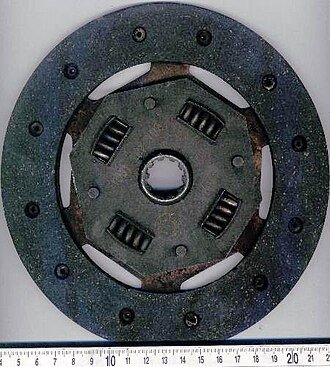
If you drive a manual car, the clutch is a wear item that will eventually need replacing. There is no single number of kilometres that fits every car, because driving style and traffic matter a lot. Here is how to tell when yours is due.
A clutch disc. Photo: Wikimedia Commons (see the file page for author and licence).
How long does a clutch last?
It varies widely. Gentle highway driving can make a clutch last a long time, while heavy stop-start traffic, towing and aggressive driving wear it faster. Lagos-style traffic is hard on clutches.
Signs your clutch is wearing out
Sign
What it suggests
Engine revs rise but the car does not accelerate properly
Clutch slipping
Burning smell
Overheated clutch lining
High or low bite point
Wear or adjustment problem
Hard to shift gears
Clutch not disengaging fully
Spongy, sticking or vibrating pedal
Hydraulic or mechanical fault
Grinding or noise when pressing the pedal
Bearing or component wear
What shortens clutch life
Resting your foot on the pedal.
Riding the clutch on hills instead of using the handbrake.
Heavy loads and towing.
Stop-start traffic.
Rough gear changes.
How to make it last
Keep your foot off the clutch pedal when not changing gears.
Vehiclespot.ng is a leading car dealer in Nigeria, offering an innovative online automobile marketplace that connects buyers and sellers effortlessly. In addition to buying and selling vehicles, we provide a range of auto services designed to meet all your automotive needs.