Walk through any motor park, church car park or Lagos traffic jam and count the Toyota Corollas. You will lose count quickly. Taxi drivers, civil servants, young professionals and retired teachers all seem to own one at some point. This guide looks at the Toyota Corolla history, why the car became so popular around the world and in Nigeria, and what a careful buyer should check before paying for one.
A short Toyota Corolla history
Toyota first launched the Corolla in the 1960s as a small, affordable family car for ordinary households. The idea was simple: build something reliable, economical and easy to live with, then price it so that a working family could afford it. That formula worked, and the name has stayed on the market through many generations since.
The Corolla is widely reported as one of the best-selling car nameplates in the world. We will not quote exact sales figures here, because numbers differ between sources and change over time. What matters for a buyer is the reason behind the popularity. Millions of owners kept coming back to the same name because the cars did the basic job well, year after year.
If you want official information on the current range, the manufacturer’s own site at Toyota is the right place to start, though models sold in other countries can differ from what reaches Nigeria.
How the Corolla changed over the years
The earliest Corollas were small, light and plain. Over the generations the car grew in size, and the cabin became roomier. Safety also moved forward in general terms: later cars gained more airbags, better body structures and electronic stability aids, features that were rare on early small cars. Equipment followed the same path. Air conditioning, power windows, central locking, touchscreens and driver assistance systems slowly moved from optional extras to normal items.
The trade-off is that a bigger, more equipped car is also a more complex one. That matters a great deal when you are buying a used car in Nigeria, which we come to below.
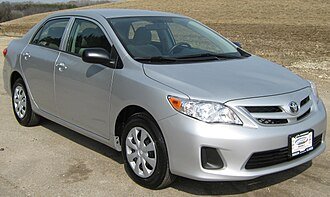
A tenth-generation Corolla. Photo: Wikimedia Commons (see the file page for author and licence).
Why the Corolla is so common in Nigeria
Simple, proven engineering
Many Corollas use straightforward engines that mechanics have worked on for decades. Fewer exotic parts means fewer surprises when something wears out.
Spare parts everywhere
From Ladipo to Alaba to roadside shops in smaller towns, Corolla parts are among the easiest to find. Both new and used parts are common, and there is usually more than one price level to choose from.
Mechanics who know the car
Because the car is so common, almost every mechanic has repaired one before. That experience saves time and often saves money, since a mechanic who has seen the fault ten times diagnoses it quickly.
Resale value
Buyers recognise the name, so a clean Corolla is usually easier to sell than many rivals. Prices still depend on condition, mileage, history and the market at the time, so check recent adverts rather than trusting anyone’s memory.
Fuel economy
With fuel costs a constant worry, a small-engine Corolla is generally kind to the pocket compared with bigger cars. Actual consumption depends on the engine, your driving and traffic, so treat any quoted figure with care.
Older versus newer Corollas: what it means for you
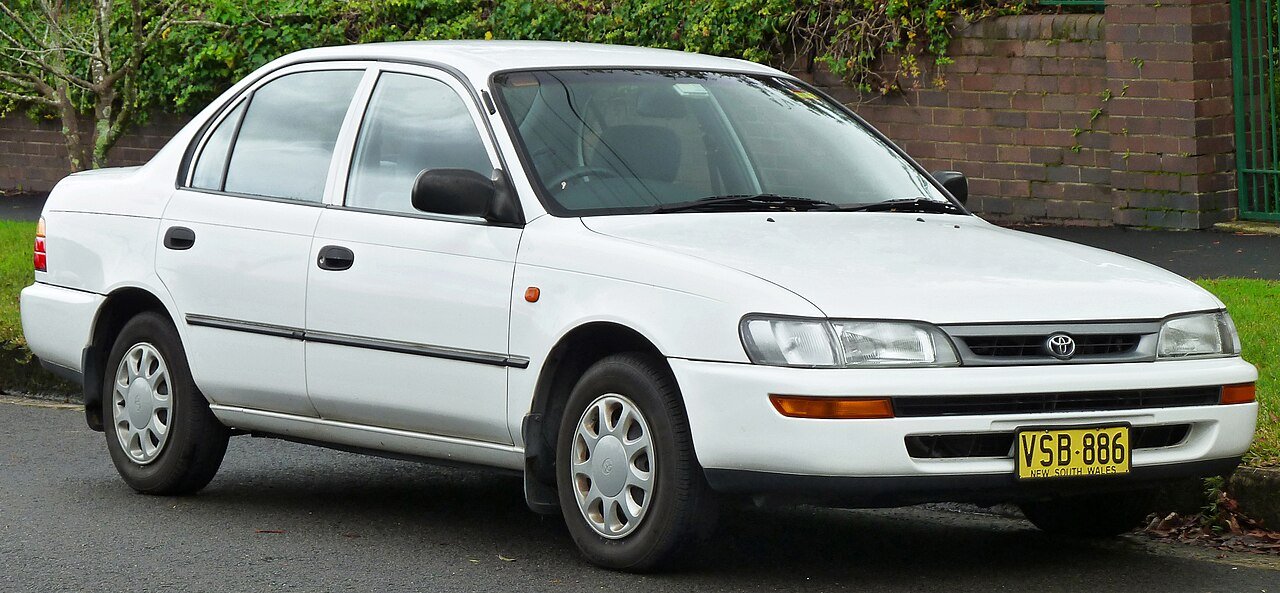
This is the part many buyers skip. An older Corolla, such as the style in the picture below, is usually mechanically simple. There is less electronics to fail, a conventional automatic or manual gearbox, and repairs tend to be cheaper. The downside is age: rubber parts, suspension, wiring and rust can all be tired, and safety equipment is more basic.
A newer Corolla gives you more comfort, better safety features and often a more modern feel. It can also bring more electronics, sensors and, in many cases, a CVT gearbox. A CVT can work well, but it generally needs the correct fluid, on-time servicing and a mechanic who understands it. Neglect can lead to expensive repairs. Our guide on Toyota transmission problems explains what to watch for.
Electronics deserve special attention on imported used cars. Flooded or poorly stored vehicles can develop warning lights and strange faults later, so test every switch, window and screen function.
An older Corolla. Photo: Wikimedia Commons (see the file page for author and licence).
Which generation suits which buyer?
Tight budget, happy to maintain: an older, simpler Corolla can suit you, provided you pay for a thorough inspection and accept that some parts will need replacing.
Daily commuter or small family: a middle-aged Corolla with a clean history often gives a good balance of price, comfort and simplicity.
Safety and features matter most: look at newer cars, but budget for proper servicing and ask about the gearbox type before agreeing a price.
Taxi or ride-hailing use: choose the car with the lowest running and repair costs for your routes, and check what your platform currently allows.
Buying on the badge alone. A Corolla is generally a sensible choice, but a neglected one is still a neglected car. The name does not repair a worn gearbox or a hidden accident.
Ignoring history. Ask where the car came from, how many owners it had and whether service records exist. Walk away from sellers who cannot or will not answer.
Choosing features over maintenance. A newer car with every gadget can cost more to keep running than a plainer one. Think about the total cost over a few years, not just the purchase price.
Skipping the mechanic. Paying for an inspection is small compared with the cost of a major repair afterwards.
Rushing. Pressure to pay today is a warning sign. A good car will still be a good car tomorrow.
Frequently asked questions
Is the Toyota Corolla really the best-selling car in the world?
The Corolla is widely reported as one of the best-selling car nameplates ever. Different sources count differently, so treat claims of an exact ranking with caution.
Is a used Corolla a good buy in Nigeria?
It often is, because parts and mechanics are easy to find and resale is usually decent. The condition of the individual car still matters more than the name.
Should I worry about a CVT gearbox?
Not automatically, but you should ask for service history, use the correct fluid and have a knowledgeable mechanic check it. Read about how long Toyota and Honda cars last for more context on long-term ownership.
Is an older Corolla safer to maintain than a new one?
Older ones are usually simpler and cheaper to fix, while newer ones usually offer better safety equipment. Which is better depends on your budget and how you use the car.
Verdict
The Corolla earned its reputation through ordinary strengths: simple engineering, easy parts, familiar mechanics and sensible running costs. Those strengths fit Nigerian conditions well, which explains why you see so many of them. Still, the best Corolla for you is the one with honest history, a clean inspection and a service plan you can afford. Choose the generation that matches your budget and needs, verify everything with a trusted mechanic or official source, and the badge will do the rest of the work.
Finding a trustworthy car mechanic in Nigeria takes a little homework. Here is how to choose one, what to ask, which warning signs to watch for and how to avoid fake parts.
Thinking of a used Range Rover in Nigeria? Here is an honest look at why people love them, what ownership really involves, how to inspect one and who should look elsewhere.
Vehiclespot.ng is a leading car dealer in Nigeria, offering an innovative online automobile marketplace that connects buyers and sellers effortlessly. In addition to buying and selling vehicles, we provide a range of auto services designed to meet all your automotive needs.