The Honda CR-V has been one of the most trusted family SUVs on Nigerian roads for years. Most buyers here know the older models well. But the latest generation, sold from the 2023 model year, is a different story. If you are considering a Honda CR-V 2023 in Nigeria, you need to go in with realistic expectations. This guide explains what is different, what to check, and who should actually buy one.
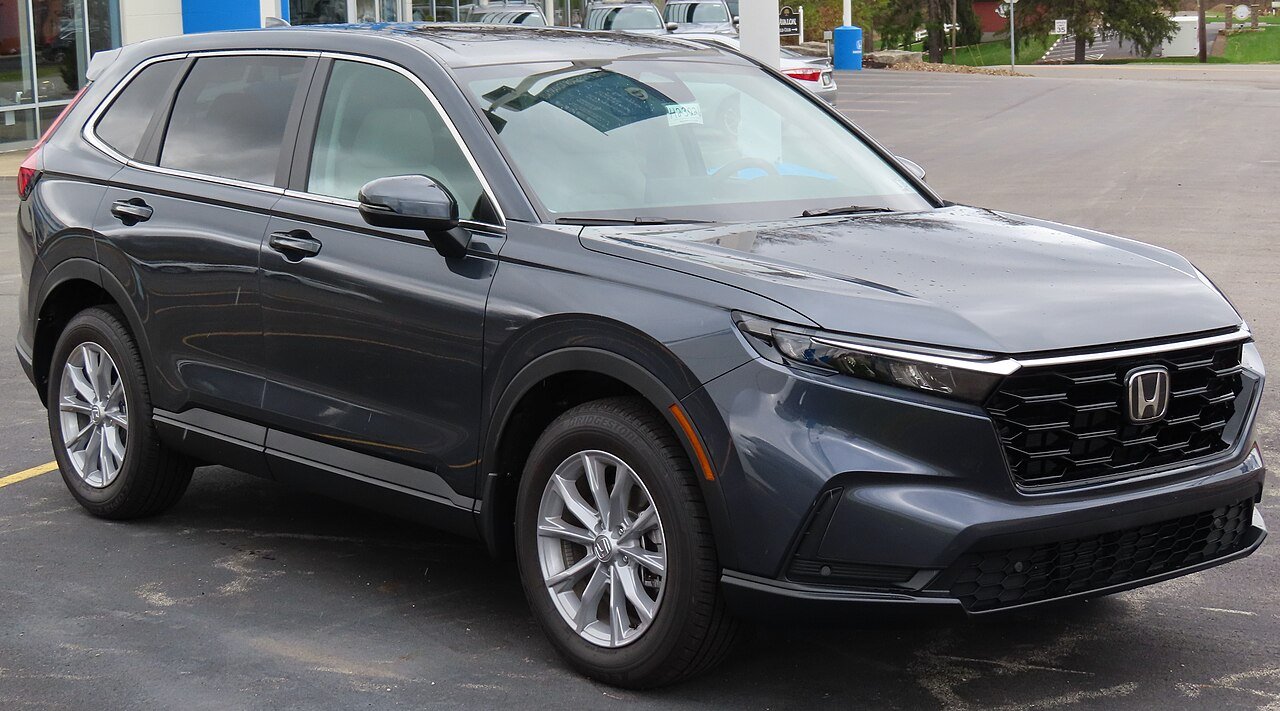
Honda CR-V EX-L (2023 model shown). Photo: Wikimedia Commons (see the file page for author and licence).
An Honest Starting Point: This Is a Very New Generation
Let us be direct. The 2023-and-later CR-V is a very new generation. Because it is so recent, the number of used examples reaching Nigeria is still small. You will not find them on every dealer lot in Lagos or Abuja the way you find older CR-Vs.
That has two effects. First, choice is limited, so you may wait or travel to find the right one. Second, prices are high compared with older generations. Sellers know that a newer vehicle is scarce, and they price it that way. Be careful of anyone who claims to have many of them at cheap prices. That is usually a warning sign.
If you are still learning the basics of the model line, start with our Honda CR-V used SUV buyers guide, then come back here for the newer generation.
What Is Different About the Newer CR-V
Speaking generally, the newer CR-V is bigger and more modern than the models many of us grew up with. Expect a roomier cabin, a more upright and substantial look, and a more up-to-date dashboard with larger screens and more digital features.
Here are the main areas where it generally differs from older versions.
Size and comfort
Rear passengers and luggage usually benefit from the extra space. For families that carry children, school bags and shopping, this matters. Do not assume, though. Sit in the back seat, fold the seats, and check that it suits your own needs.
Hybrid availability
In some markets, Honda offers the CR-V with a hybrid system. Whether a hybrid is practical for you in Nigeria is a separate question. Hybrid systems have a battery and extra electronics, and not every workshop here is comfortable with them. If a car you are offered is a hybrid, ask what servicing support exists near you before you pay anything.
Driver-assistance technology
Newer CR-Vs generally come with advanced driver-assistance features, such as cameras and sensors that help with braking, lane keeping and parking. These are useful, but they rely on sensors in the bumpers, windscreen and mirrors. After even a minor accident or a windscreen replacement, these systems may need proper calibration. Test that every warning light and assistance feature works as it should.
Engine and Turbo Care in General Terms
Many modern SUVs, including recent CR-Vs in several markets, use smaller turbocharged engines instead of the larger naturally aspirated engines of the past. Turbo engines can be efficient and pleasant to drive, but they ask more of the owner.
Use the oil grade and quality that the manufacturer recommends, and change it on time.
Use good fuel from stations you trust. Poor fuel is hard on any modern engine.
Allow the engine to warm up gently and avoid hard driving straight after a cold start.
Do not ignore warning lights, leaks or unusual noises.
Always follow the owner manual for the exact specification, because it depends on the engine and the market the car was built for.
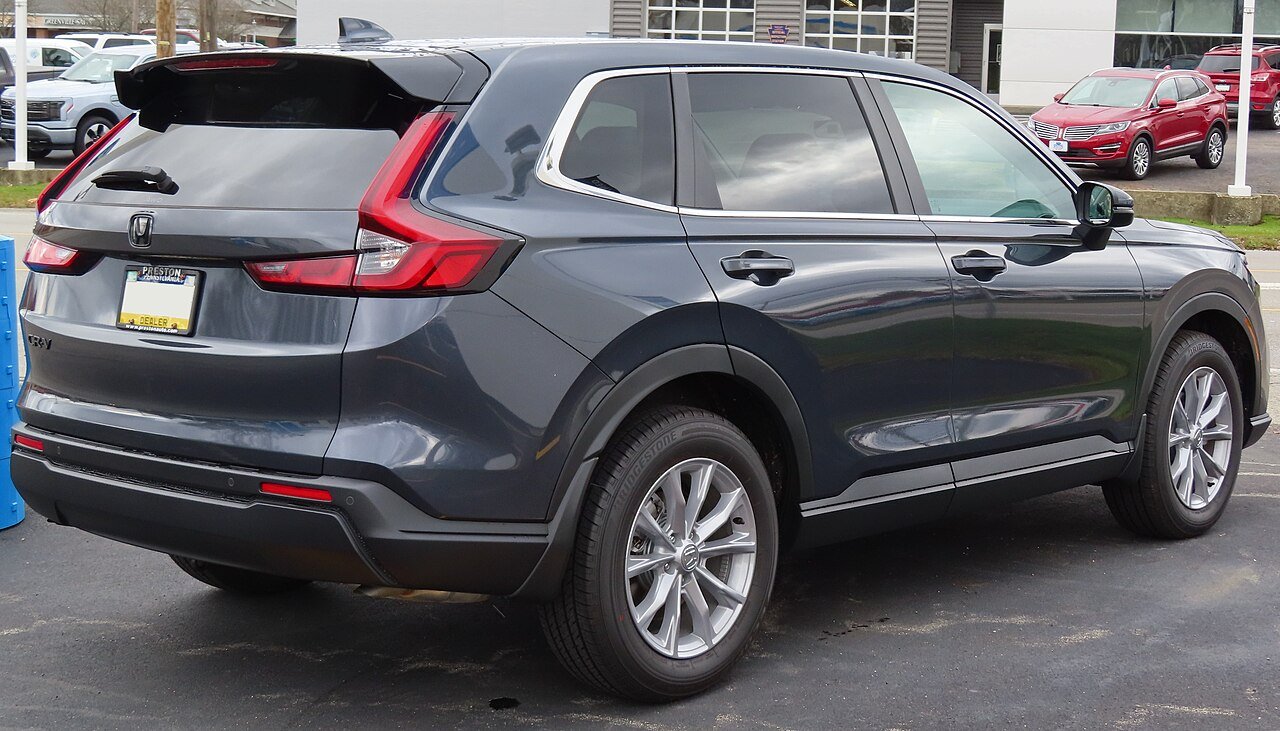
Rear view of the 2023 Honda CR-V EX-L. Photo: Wikimedia Commons (see the file page for author and licence).
Parts and Servicing: Verify Before You Buy
This is one of the biggest questions for a new generation. Older CR-Vs enjoy plenty of parts and many mechanics who know them well. A 2023-or-later model does not yet have the same depth of support in Nigeria.
Before buying, do the following:
Ask which workshop will service the car, and ask whether they have worked on this generation before.
Find out whether the parts you are most likely to need, such as filters, brake parts, sensors and lights, can be sourced locally and how long they take.
Check whether the correct diagnostic tools are available to your mechanic, since newer cars depend heavily on software.
Ask about body parts and glass. Modern headlights and bumpers with sensors can be costly to replace.
Do not rely on a seller saying that parts are easy to find. Confirm it yourself with a parts dealer or a trusted workshop.
Warranty Status and Accident History
A newer car may still have some of its original manufacturer coverage, but warranty terms usually depend on the country and on the original market. A warranty from another country may not be honoured in Nigeria. Ask for written proof of what remains, and ask the seller or the nearest Honda representative whether it can be used here. If it cannot, treat the car as having no warranty and price it that way.
Accident history deserves extra attention on a recent model. Because the car is so new, a seller may say that it cannot have any problems. That is not a reason to skip checks. Look for uneven panel gaps, paint differences, overspray, replaced airbags or lights, and warning lights on the dashboard. Ask for the history report where available, and get an independent inspection from a mechanic you trust. Our guide on common Honda CR-V problems in Nigeria lists general checks that are worth doing on any CR-V.
Import Paperwork and Scam Protection
Whether the car is a fresh import or already in the country, the paperwork must be complete and genuine. Check the following carefully:
That the chassis number (VIN) on the body matches every document.
Customs duty papers that are real and in order, not just photocopies.
Registration, ownership and any change of ownership documents.
The name on the documents, which should match the person selling to you.
With a high-value, scarce car, scammers become more active. They advertise a rare model at a price that looks too good, then ask for a deposit. Read our advice on how to buy a tokunbo car in Nigeria without getting scammed before you send any money. Never pay before you have seen the car and the papers in person, or through a trusted representative.
Who Should Buy One, and Who Should Choose Something Else
A newer CR-V may suit you if:
You want a modern, comfortable family SUV with up-to-date safety and tech features.
You can afford the higher purchase price and are comfortable with the unknowns around parts.
You have a reliable workshop, or a good relationship with an authorised dealer, for servicing.
You plan to keep the car for a long time and drive mostly in good conditions.
An older CR-V may be wiser if:
You want lower running costs and easy, cheap parts.
You need a mechanic on every street who knows the car.
Your budget is tight and you would rather spend on a clean, well-kept older car than stretch for a new one.
Consider a Toyota RAV4 if:
You want strong local support and plenty of choice. The RAV4 has a large following in Nigeria and a wide supply of used cars. Our comparison of the Toyota RAV4 vs Honda CR-V in Nigeria will help you weigh the two, even if it focuses on the more common generations.
Frequently Asked Questions
Is the 2023 Honda CR-V easy to find in Nigeria?
No, not yet. It is a very new generation, so used supply is limited. You may need to be patient, and you should expect to pay more than for older models.
Is it a good idea to buy a newer CR-V in Nigeria?
It can be, if you accept higher cost and verify servicing, parts and papers first. If you want the cheapest running costs and the easiest repairs, an older CR-V or a RAV4 is the safer path.
What should I check first on a used 2023 CR-V?
Start with the paperwork and the VIN, then accident history, dashboard warning lights and the driver-assistance features. Finally, get an independent mechanic to inspect it before you pay.
Conclusion
The newer Honda CR-V is bigger, more modern and full of technology, and it will appeal to many buyers. But in Nigeria it is still a rare and expensive choice, and support for parts and servicing is still developing. Take your time, verify the warranty, history and import papers, and do not let the excitement of a new model push you into a rushed payment. For official information about the model, you can visit Honda’s website. If the numbers do not work for you, a well-kept older CR-V or a RAV4 may serve you better for far less stress.
Thinking of buying a Toyota Fortuner in Nigeria? Learn about space, ride, running costs, what to inspect and who it suits, compared with the Highlander and Prado.
Vehiclespot.ng is a leading car dealer in Nigeria, offering an innovative online automobile marketplace that connects buyers and sellers effortlessly. In addition to buying and selling vehicles, we provide a range of auto services designed to meet all your automotive needs.