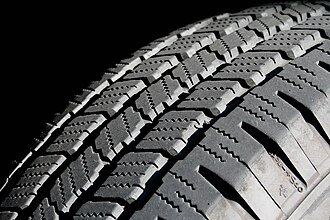
Tyres are the only part of your car that touches the road, so worn tyres affect braking, steering and safety. Many Nigerian drivers wait too long. Here is how to know when it is time to replace them.
1. Check the tread depth
Tread channels water away from the tyre. As it wears, grip falls, especially in rain. Many countries set a legal minimum of about 1.6 mm, and tyre makers often advise replacing sooner for better wet grip. Most tyres have wear indicator bars in the grooves. When the tread is level with them, replace the tyre.
2. Check the age
Rubber hardens with age, even if the tread looks fine. Find the four-digit date code on the sidewall: the first two digits are the week, the last two the year. Many tyre makers advise having older tyres inspected regularly and replacing them after roughly six to ten years, so ask a tyre professional about yours. Heat in Nigeria can speed up ageing.
3. Look for damage
| Sign |
What it can mean |
| Bulge on the sidewall |
Internal damage, often from potholes. Replace now. |
| Cracks in the rubber |
Ageing or sun damage |
| Uneven wear |
Alignment, balancing or suspension issues |
| Vibration while driving |
Balancing problem or damaged tyre |
| Repeated punctures |
Worn or damaged tyre |
4. Replace in a sensible way
Use tyres of the correct size and load rating. On many cars you should replace tyres in pairs on the same axle, and mixing very different tyres is not advisable. Ask a good tyre shop.
Why Nigerian roads wear tyres faster
Potholes, speed bumps and uneven surfaces cause impact damage. Read how potholes damage your car. Overloading and heat add to the problem.
Make your tyres last longer
- Check pressure monthly, including the spare.
- Rotate tyres as your manual recommends.
- Get wheel alignment and balancing done regularly.
- Avoid overloading.
- Slow down over bad roads.
See also our maintenance tips and our guide to caring for a car you rarely drive. Buying a used car? Include tyres in your inspection. Tyre safety guidance is also published by NHTSA.
How to do a five-minute tyre check at home
- Park on level ground and look at all four tyres and the spare in good light.
- Run your hand carefully over the tread to feel for uneven wear, sharp edges or embedded objects.
- Look at the sidewalls for cuts, cracks or bulges.
- Check the tread against the wear bars in the grooves.
- Measure pressure with a gauge when the tyres are cold, then correct it to the figure on the door-jamb sticker or in your manual.
- Look at the valve caps and make sure none is missing.
Do this monthly and before any long journey. It takes minutes and can reveal trouble long before a tyre fails on the highway.
What different wear patterns tell you
- Wear on both outer edges. The tyre has often been run underinflated.
- Wear down the centre. It is often a sign of overinflation.
- Wear on one edge only. Alignment or suspension problems are likely.
- Patchy, scalloped wear. Worn shock absorbers or balancing issues may be the cause.
Fixing the cause matters as much as replacing the tyre. Otherwise your new set wears out in the same way.
Tyres and braking
Even the best brakes cannot work properly on poor tyres. Worn tread lengthens stopping distance, particularly on wet roads. If you ever face a sudden loss of braking, our guide on what to do when car brakes fail explains how to stay calm and act safely. Keeping your tyres in good condition is one of the easiest ways to avoid needing that advice.
Buying new tyres: a practical approach
- Check the size printed on the sidewall of your current tyres and in your manual.
- Look at the manufacture date code on any new tyre. Avoid ones that have sat in a shop for years.
- Compare at least two or three shops and ask whether fitting, balancing and valve replacement are included.
- Be cautious about very cheap unbranded tyres, and about sellers who cannot show you where the tyre came from.
- Have alignment checked after fitting, especially if you hit potholes regularly.
Prices vary by size, brand and location, so get more than one quote rather than relying on a number you heard from a friend.
Tyre myths worth dropping
Some drivers think a tyre is fine as long as it holds air, or that rotating tyres is unnecessary. In truth, a tyre can hold air and still be dangerously old or damaged. Our article on common car myths among Nigerian drivers covers other beliefs that deserve a second look. For further habits that keep your car safe and cheap to run, see easy car maintenance tips every car owner can follow.
Frequently asked questions
Should I replace all four tyres at once?
Not always, but uneven tyres can affect handling. Ask a tyre professional, especially on AWD cars.
Are second-hand tyres safe?
It is risky because you cannot see internal damage or age. Buy new when you can.
How do I check pressure?
Use a gauge when tyres are cold and follow the pressure on the door-jamb sticker.
Bottom line
Check tread, age and damage regularly. When in doubt, replace. Tyres are cheaper than accidents.
Disclaimer: General guidance. Have a qualified tyre technician inspect your tyres.