The Hyundai Elantra in Nigeria has built a steady following among buyers who want a compact sedan that feels well equipped without costing as much as some rivals. You will see it in private garages, ride-hailing queues and company fleets across Lagos, Abuja and Port Harcourt. This guide explains why people choose it, what to check before paying for a used one, and what ownership realistically looks like.
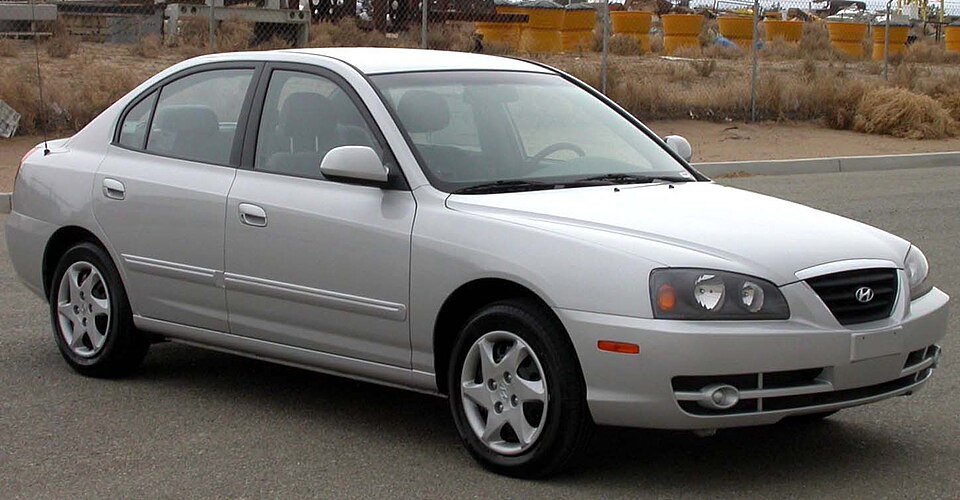
Hyundai Elantra (2004 model shown). Photo: Wikimedia Commons (see the file page for author and licence).
Why Nigerian Buyers Consider the Elantra
The main appeal is value. Compared with many rivals in the compact class, the Elantra has usually offered a generous list of features for the money: air conditioning that copes with heat, power windows and mirrors, a decent audio system, and on higher trims extras such as alloy wheels, a sunroof or leather-type seats. Exact equipment depends on the model year and trim, so always check what the specific car has rather than trusting a seller’s description.
Comfort is the second reason. The cabin is generally roomy for the class, the ride is softer than some sportier competitors, and rear passengers are not cramped. That matters on Nigerian roads, where a compliant ride helps over rough patches and speed bumps.
Styling is the third. Newer Elantras look modern and a little more daring than the average family sedan, which appeals to younger buyers and anyone who wants a car that does not look like every other taxi on the road.
Generations in General Terms
The Elantra has been sold for several decades and has gone through multiple generations. Without getting lost in model codes, it helps to think in three broad groups.
Older models (early 2000s): simple, basic and cheap to buy. They suit budget buyers, but age is the issue. Rubber parts, wiring and suspension components are often worn.
Middle-era models: a more refined cabin, better safety content and a more modern look. Many Nigerian-used examples fall into this group.
Recent models: sharper styling, more technology and more driver aids. They cost more and are usually found as foreign-used imports or in dealer stock.
Engine and gearbox options differ between generations and markets, so check the car’s documents and the manufacturer’s information instead of relying on assumptions. Hyundai’s own website, hyundai.com, is a useful place to understand the current range and how the badge positions the model.
What to Inspect on a Used Elantra
Any used car deserves a careful check, and our used car inspection guide covers the general process step by step. For the Elantra specifically, focus on the following.
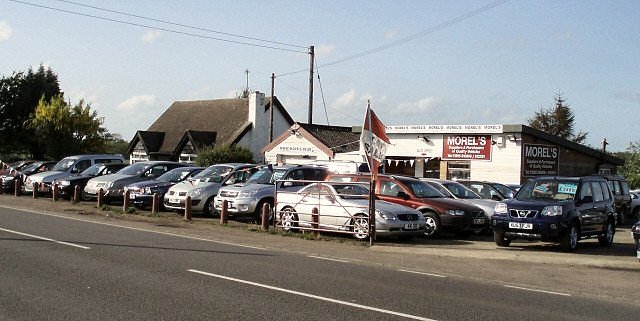
Inspecting used cars at a dealer lot takes time, so go in daylight and do not rush. Photo: Wikimedia Commons (see the file page for author and licence).
Engine
Start the car from cold. Listen for rattles, knocking or a rough idle that settles only after warming up.
Check oil on the dipstick. Very dark, sludgy or milky oil is a warning sign.
Look under the bonnet and under the car for oil or coolant leaks.
Watch the temperature gauge during a test drive, especially in traffic. Overheating suggests cooling system problems.
Ask for service records. A car with a regular oil-change history is a far safer bet.
Transmission
On automatics, shifts should be smooth. Harsh jerks, delayed engagement or slipping between gears are expensive red flags.
Check the fluid colour and smell if you can. Burnt-smelling fluid is a bad sign.
On manuals, test the clutch bite point and listen for noise when the pedal is pressed.
Suspension and Steering
Drive over uneven ground and listen for knocks, which can mean worn links, bushes or shock absorbers.
The car should track straight. Pulling to one side points to alignment or tyre problems, and sometimes accident damage.
Check for uneven tyre wear, which often reveals suspension issues.
Air Conditioning
Run the AC on full for several minutes. It should blow properly cold and the compressor should engage without strange noises. In Nigeria’s heat, a weak AC is more than a comfort issue, and repairs can add up.
Electrics
Test every window, mirror, central locking function, light, wiper and the infotainment system. Check that no warning lights stay on after starting. Intermittent electrical faults can be annoying to trace.
Rust and Body
Look along door bottoms, wheel arches and the boot floor for rust or bubbling paint.
Uneven panel gaps, mismatched paint shades or overspray on rubber seals suggest accident repair.
Lift the boot carpet and check for water ingress, which can signal poor repairs or flood exposure.
Paperwork
Confirm the chassis number matches the documents, and that customs papers, registration and ownership records are genuine. If the car is a foreign-used import, make sure duty has been paid and can be verified. Never hand over money before you have seen original documents and checked them independently.
Parts and Servicing in Nigeria
Hyundai is a well-known brand here, and many mechanics have worked on Elantras. Common service items such as filters, brake pads, belts and spark plugs are generally easy to source. That said, availability varies by model year, engine and location. Parts for newer or less common variants can take longer to find, and prices can change with exchange rates and import conditions.
Be honest with yourself before buying: check with a trusted mechanic or parts dealer in your city whether parts for that exact year and engine are in stock, and ask for current prices. Genuine, aftermarket and used parts all circulate, and quality differs. A good independent mechanic who knows Korean cars is often as valuable as a franchise workshop, so find one early.
Fuel Use and Running Costs
The Elantra is a compact sedan, so fuel use is generally moderate compared with larger sedans and SUVs. Actual consumption depends on engine size, transmission, condition and how you drive. Heavy Lagos traffic, constant AC use and poor maintenance all push consumption up. Treat any figure quoted by a seller as a claim to test, and judge the car by how it behaves on your own trial drive.
Beyond fuel, budget for regular servicing, tyres, insurance and the occasional repair. An older, cheaply bought car can end up costing more than a better-maintained, pricier one, so total cost matters more than the sticker price.
Elantra vs Corolla vs Civic
The Toyota Corolla is usually regarded as the safe choice, with strong resale value and wide parts support. The Honda Civic tends to appeal to those who like sharper handling and sporty looks. The Elantra’s pitch is more equipment and comfort for the money, though resale value and parts depth may not match the Corolla’s. For a closer look at two of these rivals, read our comparison of the Toyota Corolla and Honda Civic, and our broader piece on Honda vs Hyundai in Nigeria.
Who Should and Should Not Buy One
It suits you if you want a comfortable, well-equipped sedan at a sensible price, you have a reliable mechanic, and you are willing to inspect the car carefully before buying.
Think twice if resale value is your top priority, you need guaranteed easy parts for every variant, or you plan to buy the cheapest, oldest example without a proper inspection. In those cases a Corolla may serve you better.
A well-maintained Elantra can serve for years. Reliability depends heavily on the car’s history, service record and how it was driven, so a thorough inspection matters more than the badge.
Are Hyundai Elantra parts easy to find?
Common service parts are generally available, but availability varies by year, engine and city. Confirm with a mechanic or parts dealer before you buy.
Should I buy a foreign-used or Nigerian-used Elantra?
Either can be good or bad. Judge each car on its condition, documents and history rather than where it came from, and verify import and customs papers independently.
Conclusion
The Hyundai Elantra in Nigeria offers comfort, features and styling at a price that many buyers find attractive. Its weak spots are mostly the usual used-car risks, plus parts availability that can vary by variant. Inspect the engine, gearbox, suspension, AC, electrics and body, verify the papers, check parts for your exact model, and negotiate using what you find. Do that, and the Elantra can be a smart compact sedan choice.
Considering a Toyota RAV4 in Nigeria? Learn why it is popular, what to inspect on a tokunbo or Nigerian-used unit, and what it costs to keep on the road.
Vehiclespot.ng is a leading car dealer in Nigeria, offering an innovative online automobile marketplace that connects buyers and sellers effortlessly. In addition to buying and selling vehicles, we provide a range of auto services designed to meet all your automotive needs.