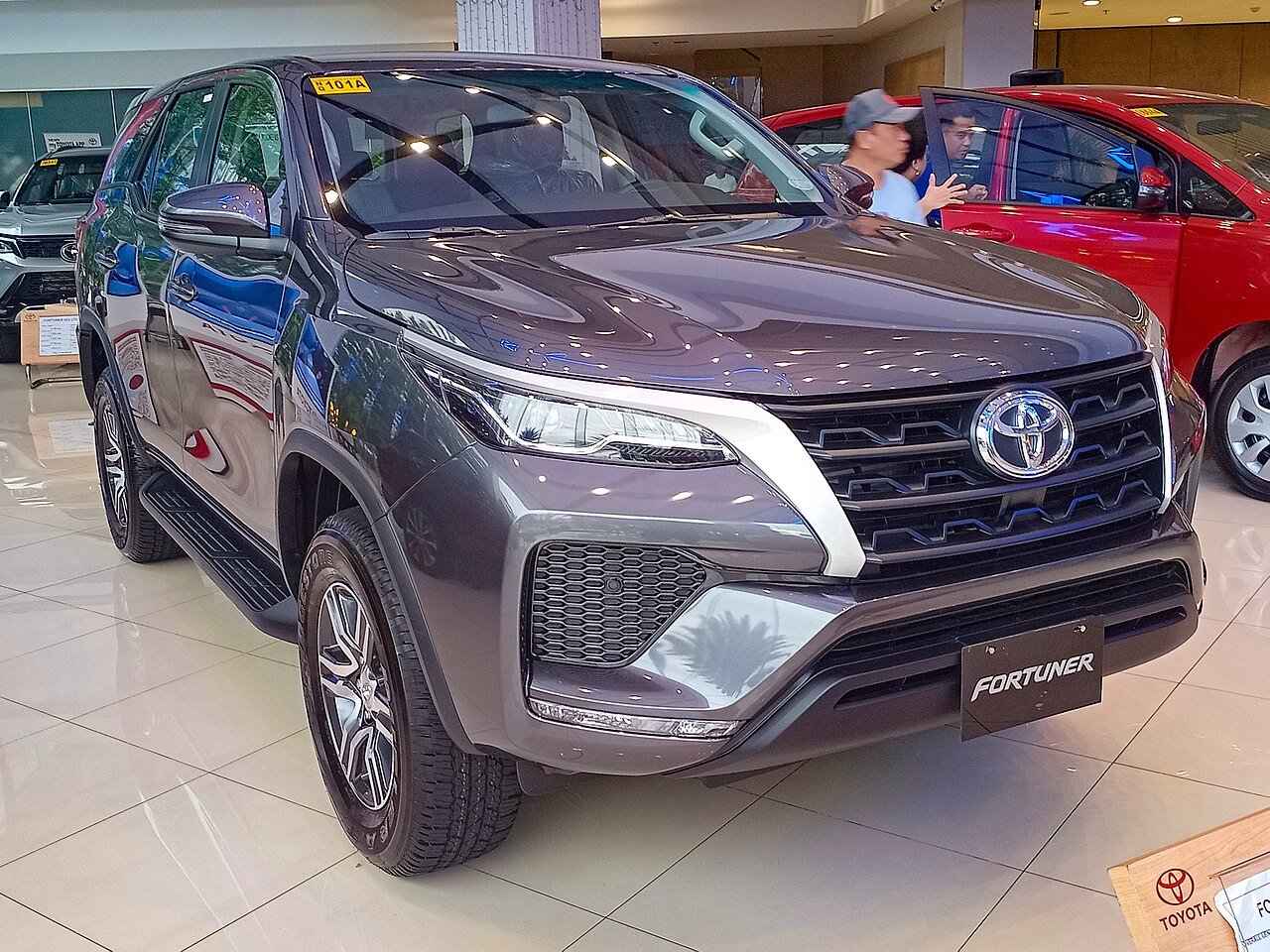
The Toyota Fortuner is a rugged 7-seat SUV that many Nigerian buyers hear about but do not see as often as the RAV4, Highlander or Prado. If you are considering a Toyota Fortuner in Nigeria, this guide explains what the vehicle is, what to expect from it, what to check before paying, and whether it fits your needs.
Toyota Fortuner (2024 model shown). Photo: Wikimedia Commons (see the file page for author and licence).
What Is the Toyota Fortuner?
The Fortuner is a mid-size, body-on-frame SUV made by Toyota. It is widely reported to be built on the same kind of platform as the Hilux pickup, which is why it has a tough, truck-like character. It is sold in many markets around the world, and it normally comes as a 7-seater with three rows of seats.
Because it shares its basic engineering with a pickup, the Fortuner is built for rough roads, heavy loads and long use. That is the main reason some buyers like it. If you already know the pickup, our Toyota Hilux in Nigeria guide gives useful background on the same family of vehicles.
Is the Fortuner Easy to Find in Nigeria?
Be realistic here. Compared with the RAV4, Highlander and Prado, the supply of used Fortuners in Nigeria may be thinner. You may find fewer units for sale, fewer choices of year and trim, and less price information to compare with.
That does not make it a bad choice. It simply means you should verify a few things before falling in love with one:
Whether the exact model and year you want is available locally, or whether you would be importing it.
Whether a trusted mechanic near you has worked on Fortuners before.
Whether spare parts for that specific version are easy to get.
Whether the seller can show proper papers for that unit.
Do this homework first. A good vehicle that is hard to service can become a headache.
Space, Comfort and Ride
Seating and space
The Fortuner is a 7-seat SUV, but be sensible about the third row. As in most SUVs of this type, the last row suits children or short trips better than tall adults on long journeys. With the third row folded, you get more room for luggage. Sit in every row yourself before buying, especially if you travel with a full family.
Ride quality
Body-on-frame SUVs usually feel tougher and more truck-like than car-based crossovers. Expect a sturdy feel and good ability on bad roads, but the ride can feel firmer or bouncier than a Highlander, particularly when the car is empty. Many buyers accept this trade-off in return for strength. Take a proper test drive on a road that is not smooth so you can judge it yourself.
Driving position
The seating position is generally high, which gives a good view of the road and helps in traffic and flooded or uneven streets. Check that visibility, seat comfort and the air conditioning suit your daily routine.
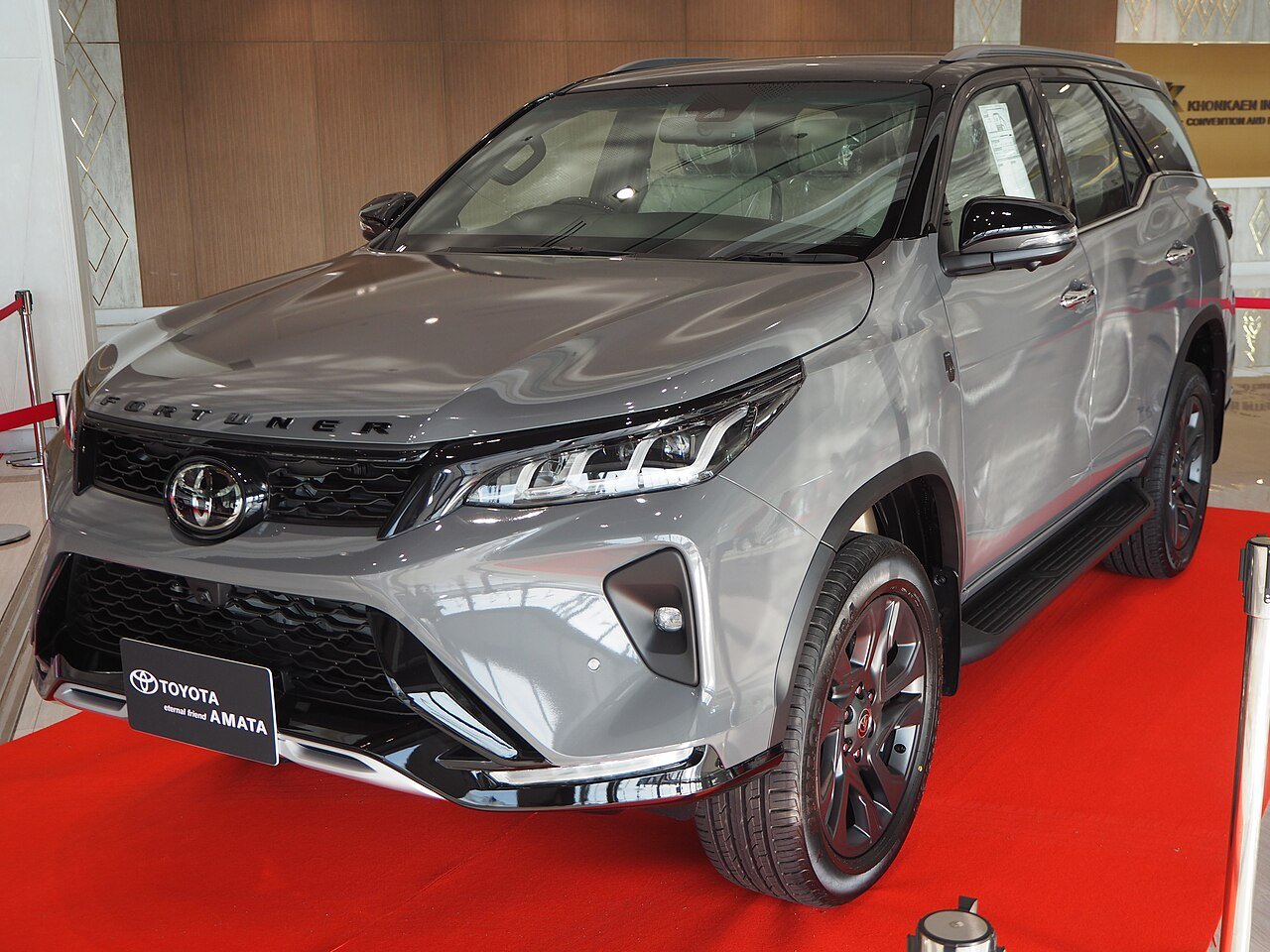
Toyota Fortuner Legender (2022 model shown). Photo: Wikimedia Commons (see the file page for author and licence).
Off-Road Ability
Because of its truck-style construction, the Fortuner is generally regarded as capable on rough roads, but this depends on the version. Some Fortuners are 2WD (rear-wheel drive) and some are 4WD. A 2WD version will not behave like a 4WD one on muddy or sandy ground, so check which one you are actually buying and what the owner needs.
If you drive mostly on city roads and highways, you may never need 4WD, and a simpler 2WD unit can mean fewer parts to maintain. If you travel on bad rural roads, 4WD may be worth it. Do not pay extra for 4WD badges without confirming the system actually works.
Running Costs: Fuel, Servicing and Parts
Running cost is where you should be careful and honest with yourself. A 7-seat body-on-frame SUV is not a small economy car. Fuel use will usually be higher than a compact SUV, and tyres, brakes and suspension parts are bigger and can cost more.
Diesel or petrol?
Fortuners have been sold with both diesel and petrol engines in different markets. Which one you find in Nigeria depends on the unit. Think about:
Diesel: Often chosen for torque and towing, but it needs good-quality fuel and clean filters, and the fuel system should be checked carefully.
Petrol: Usually smoother and quieter, and many Nigerian mechanics are very familiar with petrol engines.
Ask a mechanic who knows the exact engine which is easier to maintain locally. Do not assume that because one is cheaper to buy, it will be cheaper to own.
Servicing and parts
Toyota has a wide dealer and parts network around the world, but availability for a particular model in your city can still vary. Before you buy, ask a mechanic or parts seller for the price and availability of common items such as filters, brake pads, suspension parts and belts. You can also read general information on the manufacturer’s website at Toyota, though specifications for your unit may differ by market.
What to Inspect Before You Buy
Whatever you choose, inspect it thoroughly. Our used car inspection guide covers the general process. For a Fortuner, pay special attention to these areas.
Suspension: Listen for knocks over bumps. Check for worn bushes, leaking shock absorbers and uneven tyre wear. Rough-road use can wear these parts quickly.
4WD system (if fitted): Test that it engages and disengages properly. Check for warning lights and unusual noises from the transfer case and axles.
Engine: Start from cold. Look for smoke, rough idling, oil leaks and overheating. Ask for service records.
Transmission: Whether manual or automatic, check for smooth gear changes, no slipping, no harsh jerks and no delay when engaging drive or reverse.
Air conditioning: With three rows, the AC matters. Make sure it cools the whole cabin, including the rear, and that the blower works on all speeds.
Accident history: Check panel gaps, paint differences, overspray and uneven door fit. Look at the chassis and under the car for signs of bending or repair.
Flood history: Look for damp smells, rust on seat rails, mud in hidden corners and corroded wiring or connectors.
Paperwork: Confirm the chassis number matches the documents, check the proof of ownership and customs papers, and be sure the seller is the real owner.
If possible, pay an independent mechanic to inspect the vehicle before you pay. It is a small cost compared with the price of the car.
Fortuner vs Highlander vs Prado
These three are often considered by families who want a big Toyota SUV, but they are different vehicles.
Highlander: Car-based and usually more comfortable on tarred roads, with a smoother ride and an easier driving feel. It is generally easier to find. See our Toyota Highlander in Nigeria guide.
Prado: Also tough and body-on-frame, with a strong reputation for being a capable and premium-feeling SUV. Used units are usually more widely seen in Nigeria. Read our Land Cruiser Prado guide.
Fortuner: A tough, simpler, more truck-like 7-seater. It may appeal if you want Hilux-style strength, but it may be harder to find and compare.
In short, the Highlander favours comfort, the Prado favours capability and availability, and the Fortuner sits in the middle with a rugged feel.
Who Should Buy a Fortuner?
A Fortuner may suit you if:
You want a strong 7-seat SUV for family use and rough roads.
You like the idea of a Hilux-type platform.
You have confirmed that parts and a competent mechanic are available.
You found a clean unit with clear papers and a verified history.
It may not suit you if:
You want the smoothest possible ride for city driving.
You want the widest choice of used units and easy price comparison.
You need very low fuel costs.
You cannot confirm where to service it.
Frequently Asked Questions
Is the Toyota Fortuner a good used SUV in Nigeria?
It can be, if you find a well-maintained unit and have a mechanic who knows it. Its strengths are a tough build and 7-seat space. The main risk is thinner supply, so check availability and parts before you commit.
Is the Fortuner the same as the Hilux?
No, but it is widely reported to be built on a Hilux-type platform. That means it shares a similar truck-style foundation, but it is a different vehicle with a passenger body, third-row seating and different features.
Should I buy the 4WD or 2WD version?
It depends on where you drive. For mostly tarred roads, 2WD may be enough. For rough or muddy roads, 4WD helps, but only if the system is working. Always test it before paying.
Conclusion
The Toyota Fortuner in Nigeria is a sensible option for buyers who want a rugged 7-seat SUV with a truck-style build. It is not as easy to find as the Highlander or Prado, so do your homework on availability, parts, servicing and the diesel or petrol choice before buying. Inspect the suspension, 4WD, engine, transmission and AC carefully, check for accident and flood damage, and confirm the paperwork. If everything checks out, a Fortuner can be a strong and practical family vehicle.
Thinking of the Toyota bZ4X in Nigeria? We look honestly at charging, power supply, servicing, import duty and resale to help you decide if an electric SUV fits your life.
Vehiclespot.ng is a leading car dealer in Nigeria, offering an innovative online automobile marketplace that connects buyers and sellers effortlessly. In addition to buying and selling vehicles, we provide a range of auto services designed to meet all your automotive needs.