A hybrid car battery has no single fixed lifespan. How long it lasts depends on the car’s age, the heat it has lived in, how it was driven and how well it was looked after. Many hybrid batteries serve their owners for years, but none lasts forever, so a buyer in Nigeria should check the condition of the battery before paying, not after. Manufacturers publish warranty terms for their hybrid batteries, and you should verify those terms for the exact car you are considering.
What the Hybrid Battery Actually Is
Many buyers confuse two different batteries. Knowing the difference saves you from wrong advice at the mechanic’s workshop.
The hybrid (traction) battery
This is the large battery pack that helps move the car. It stores energy recovered while braking and supplies power to the electric motor. It lets the engine switch off at low speed and helps cut fuel use. It is usually placed under the rear seat or in the boot area and has its own cooling system.
The 12V battery
Hybrids also carry an ordinary 12V battery, much like a petrol car. It runs the lights, the computers and the systems that start up the hybrid system. A weak 12V battery can make a hybrid refuse to start or throw up strange warnings, even when the big hybrid battery is perfectly healthy. It is cheaper and easier to replace, so rule it out first when something seems wrong.
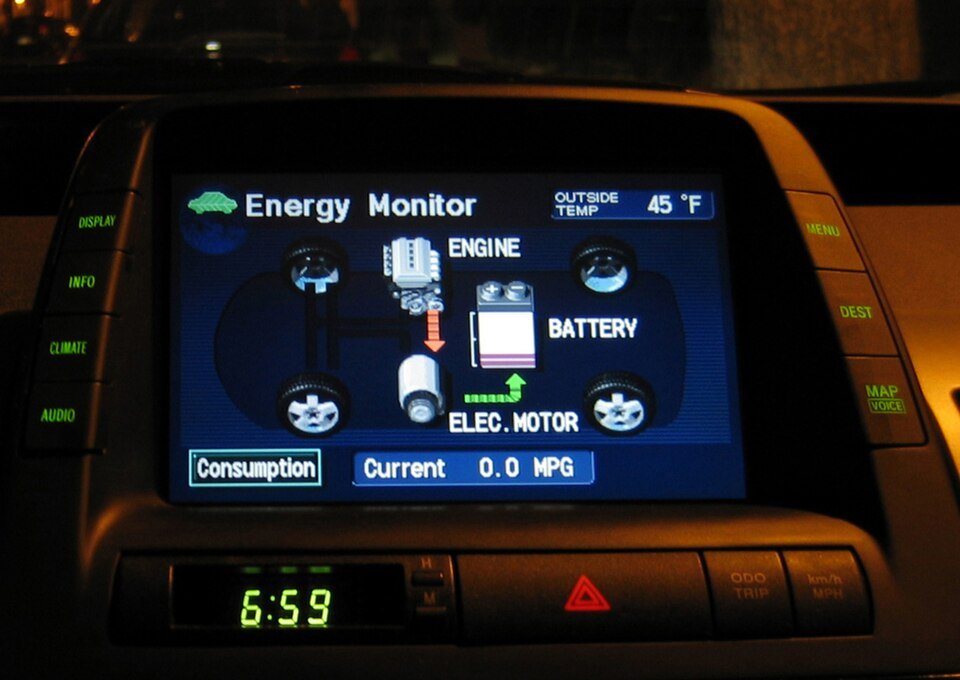
A hybrid energy display showing power flow. Photo: Wikimedia Commons (see the file page for author and licence).
What Affects How Long a Hybrid Battery Lasts
No honest seller can promise an exact number of years or kilometres. These are the factors that shape the result.
Heat: Batteries do not like high temperatures. Nigeria’s warm climate, long traffic jams and cars parked in the sun can put extra stress on the pack, which makes cooling very important.
Age: Battery cells wear with time, even when a car is rarely driven. A hybrid that sat unused for long periods can still have a tired battery.
Charging cycles: Every time the battery charges and discharges, it wears a little. Hybrid systems are designed to keep the battery in a middle range to reduce this wear, but heavy use still adds up over the years.
Driving style: Smooth driving with gentle acceleration and braking is easier on the system than constant hard driving, though hybrids are built to handle normal use.
Cooling vents and fan: Most hybrid packs are air-cooled using a fan and vents inside the cabin. If the vents are blocked by luggage, dust or hair and the fan is dirty, the pack runs hotter than it should.
Maintenance history: A car that has had its hybrid system checked and its cooling parts cleaned is usually a safer bet than one with no records.
Warning Signs of a Weak Hybrid Battery
A failing battery rarely stops the car overnight. It usually gives hints first. Watch for these:
Falling fuel economy: If the car suddenly uses noticeably more fuel with the same driving pattern, the battery may no longer be helping as much as it should.
Warning lights: A hybrid system warning, a check-engine light or a battery warning on the dashboard needs a proper scan. Do not ignore it.
Engine running more often: If the petrol engine keeps running when it used to switch off, the system may be relying on it because the battery cannot supply enough power.
Battery gauge swings: A charge display that jumps quickly from high to low, or drops sharply under mild acceleration, can point to weak cells.
Reduced power or odd behaviour: Hesitation, rough transitions between electric and petrol power, or the car shutting down the hybrid system.
These signs can also come from other faults, such as the 12V battery, sensors or the engine itself. That is why a proper diagnosis matters more than guessing.
How to Check a Used Hybrid Before You Buy
Most Nigerian hybrids on the market are imported used cars, so you often know little about how they were treated before they arrived. Take your time with these checks. Our used car inspection guide covers the general steps for any car, and the points below add the hybrid-specific parts.
Ask for a scan or battery health report
A workshop with the right diagnostic equipment can read the hybrid system and show how the individual battery cells compare with each other. A large difference between cells is a bad sign. Ask to see the result yourself, and treat a seller who refuses a scan with caution.
Ask for service history
Records from the country of origin or from earlier owners tell you whether the hybrid system was ever serviced, whether any battery work was done and whether the car had accident damage near the battery pack.
Look at the cooling fan and vents
Find the intake vent, often near the rear seat, and make sure it is clean and not blocked. With the car on, listen for the cooling fan. A very loud fan, or no fan noise at all, deserves a question.
Take a proper test drive
Drive in town and at higher speed. Watch the battery gauge, listen for the engine starting and stopping and note any warning lights. A smooth, quiet transition between electric and petrol power is what you want to see. Let the car run for a while, because some faults only show when the system is warm.
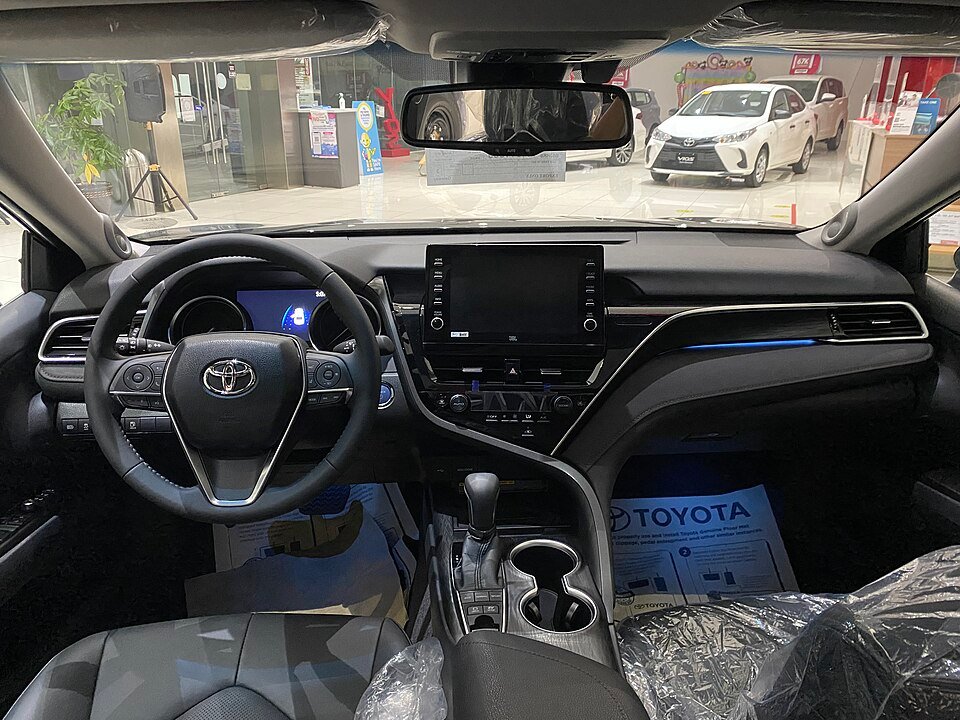
Toyota Camry Hybrid interior. Photo: Wikimedia Commons (see the file page for author and licence).
Replacement Options and Their Risks
If the battery does wear out, you generally have a few routes. Prices and availability change, so get written quotes before you decide.
New battery: Usually the most reliable choice and often comes with a warranty, but it is typically the most expensive. Confirm that the part is genuine and that the warranty is honoured in Nigeria.
Refurbished battery: A used pack that has been tested and repaired. Quality depends heavily on who did the work, so ask what was tested and what guarantee is offered.
Reconditioned battery: A pack whose cells have been balanced or recharged to restore performance. It can be a budget option, but results vary and the benefit may not last as long as a new pack.
Cell repair: Replacing only the weak cells or modules in the pack. It can cost less, but if other cells are close behind in age, the problem may return.
The main risks are poor workmanship, mixing old and new cells, no warranty and sellers who cannot show proof of testing. Hybrid battery packs carry high voltage, so do not let an untrained person open one. Always ask who did the work, what is covered and what happens if the battery fails again.
Local Service Availability: Verify Before You Buy
Support for hybrids in Nigeria is growing, but it is uneven. Some cities have workshops with proper diagnostic tools and trained technicians, while other areas may have few or none. Before buying, find out where you would take the car for hybrid servicing, whether that workshop can scan and replace the battery, and whether parts are available. Ask for their experience with your exact model. If you cannot find a reliable service option near you, think carefully, because a cheap hybrid becomes costly if every repair needs a long trip.
Who Should Buy a Hybrid?
A hybrid suits drivers who do a lot of stop-and-go city driving, because that is where the system saves the most fuel. It also suits buyers who plan to keep the car for several years, who can reach a trained workshop easily and who will pay for proper checks at the time of purchase. If you want to weigh the pros and cons in more detail, read are hybrid cars worth it in Nigeria. If you are considering a specific model, our look at the Toyota Prius in Nigeria explains what owners should expect.
A hybrid may not be right if you mostly drive long, steady highway distances, if you have no access to a hybrid-capable mechanic, or if your budget cannot cover a possible battery repair later. In those cases, a good petrol car may serve you better. You can compare options in our guide to fuel-efficient cars in Nigeria.
Habits That Help Protect the Battery
Keep the battery cooling vents clear. Do not stack bags, boxes or clothes against them.
Park in shade when you can, especially during the hottest part of the day.
Drive smoothly and avoid unnecessary hard acceleration.
Use the car regularly. Leaving a hybrid parked for weeks can weaken both the 12V and the main battery.
Do not ignore warning lights. Early diagnosis is usually cheaper than waiting.
Have the hybrid system, cooling fan and 12V battery checked during servicing, and keep your records.
Read the owner’s manual and the manufacturer’s information. For example, the maker’s own site, Toyota, publishes general information about its hybrid vehicles, though warranty terms differ by market, so confirm what applies in Nigeria.
Frequently Asked Questions
How many years does a hybrid battery last?
There is no fixed answer. Lifespan varies with the age of the car, heat, how it is used and how well it is maintained. Manufacturers publish warranty terms for their hybrid batteries, and buyers should verify those terms for the specific model and market instead of trusting a seller’s guess.
Can I drive a hybrid with a weak battery?
Sometimes you can for a while, but it is not wise to keep doing it. A weak battery can reduce fuel savings, put extra load on the engine and eventually leave the car unable to run properly. Get it scanned as soon as you see warning signs.
Is it safe to buy a used hybrid in Nigeria?
It can be, if you check carefully. Ask for a battery health scan, review the service history, inspect the cooling vents and fan, test drive properly and confirm that a competent workshop is available near you. If a seller will not allow these checks, walk away.
Conclusion
A hybrid battery can serve for a long time, but its life depends on age, heat, use and care, and nobody can promise an exact figure. For Nigerian buyers, the best protection is to check before buying: scan the battery, study the service history, inspect the cooling system, take a real test drive and confirm local service support. Do that, keep the vents clear and respond early to warning signs, and a hybrid can be a sensible, fuel-saving choice.
Thinking of buying a used RAV4? Here are the Toyota RAV4 problems often reported, what to inspect, how to test drive, and when to walk away in Nigeria.
Vehiclespot.ng is a leading car dealer in Nigeria, offering an innovative online automobile marketplace that connects buyers and sellers effortlessly. In addition to buying and selling vehicles, we provide a range of auto services designed to meet all your automotive needs.