Short answer: yes, in almost every case you should replace the oil filter each time you change the engine oil. Here is why, what the filter actually does, and what can go wrong if you skip it.
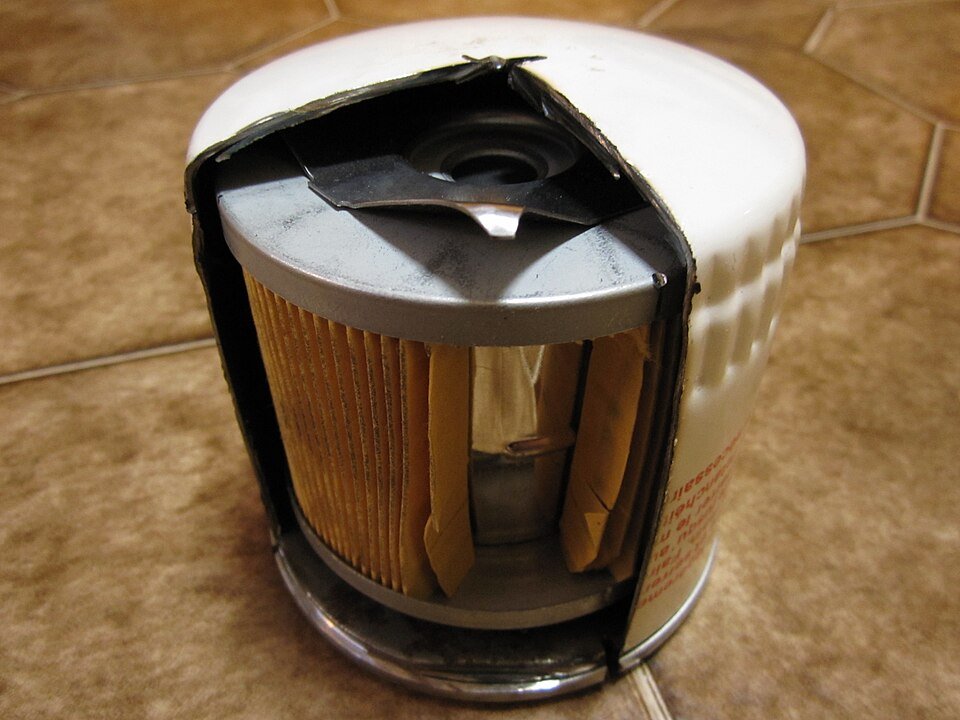
Cutaway engine oil filter. Photo: Wikimedia Commons (see the file page for author and licence).
What the oil filter does
As oil circulates, it picks up tiny metal particles, soot and dirt. The oil filter traps these before they reach moving engine parts. Fresh oil is only as clean as the filter it passes through.
Why you should change it every time
Old filters hold dirty oil. A used filter still contains old oil and trapped debris that will mix into your fresh oil.
Clogged filters can bypass. Most filters have a bypass valve that lets oil flow unfiltered when blocked, which defeats the purpose.
The cost is small. A filter costs far less than engine repairs.
Are there exceptions?
Some mechanics stretch a filter across two changes on very low-mileage cars, but most manufacturers and workshops recommend replacing it every time. Follow your owner’s manual. Nigerian conditions are harsh: dust, heat and stop-start traffic make clean filtration more important.
An oil filter is more than a metal can. Inside is a folded paper or synthetic element that catches particles while letting oil pass through. Oil is pushed through under pressure, so the element has to be strong enough not to split. A seal around the edge stops oil from leaking past the element, and a small valve prevents the oil draining back to the sump when the engine is switched off. Each of these parts can wear. That is why a used filter is not simply a clean item waiting to be reused: its element is already loaded with debris and its seal has been compressed and heated many times.
What goes wrong when you skip the filter
The danger is slow, which is why people ignore it. Fresh oil poured into an engine with an old filter picks up the dirt that is already trapped, so the new oil starts ageing immediately. Over many months, abrasive particles act like fine sandpaper on bearings, cylinder walls and the camshaft. You may notice nothing until the engine becomes noisier, uses more oil or loses power. By then the damage is done, and repairs can cost many times what a filter costs.
Step by step: what a proper oil and filter change includes
Warm the engine briefly so oil flows easily, then switch it off.
Drain the old oil fully into a container.
Remove the old filter and check that the old rubber seal came off with it. A second seal stuck to the engine causes serious leaks.
Smear a little fresh oil on the new filter’s seal and fit it as the manufacturer instructs, without overtightening.
Refit the drain plug with a fresh washer where applicable.
Fill with the correct grade and quantity of oil for your car.
Run the engine, check for leaks and recheck the dipstick level.
If you pay a workshop to do this, watch them fit a new filter from a sealed box. Do not accept a quick top-up in place of a real change.
Questions to ask your mechanic
Which oil grade and filter brand do you recommend for my specific car?
Will you show me the new filter packaging before you fit it?
Do you also check the air filter and look for leaks during the service?
Can you write the date and mileage on the service sticker or receipt?
Oil changes in Nigerian conditions
Dust, heat and long hours in traffic put extra stress on oil. Short trips never let the engine warm up fully, so moisture and fuel residue build up in the oil, while hot days thin it out and speed up ageing. If most of your driving is stop-start, treat your car as living in the tougher category of the service schedule and ask your mechanic whether a shorter interval makes sense. A fresh filter every time keeps that harsher workload from wearing down the engine.
Also remember that oil changes are only one part of the picture. Worn tyres, a weak battery and neglected brakes cause trouble too, so use the same visit to look at the rest of the car. Our guide on when to replace car tyres in Nigeria helps you judge what else may be due.
Buying a used car? Check the filter history
When you inspect a used car, ask when the oil and filter were last changed and whether receipts exist. A seller who cannot answer may have skipped servicing, and the engine may carry the cost. Our used car inspection guide shows where to look. If the history is unknown, plan to change the oil and filter straight after purchase and treat the first fluid as a reset.
Myths to ignore
Some drivers believe an oil filter lasts as long as the car, or that it is enough to add oil when the level drops. Neither is true. Topping up replaces what burns off but does not remove contaminants. If you want to separate fact from habit, our article on common car myths among Nigerian drivers clears up several other ideas that cost owners money.
Keep a simple service record
Write down the date, mileage, oil grade and filter brand every time. A tidy record helps you decide when the next change is due and proves care when you sell the car. For more habits worth building, read our easy car maintenance tips for every car owner in Nigeria. Low-mileage cars need attention too, because oil ages with time. If your car sits for long periods, see how to care for a car you rarely drive.
Finding a trustworthy car mechanic in Nigeria takes a little homework. Here is how to choose one, what to ask, which warning signs to watch for and how to avoid fake parts.
Thinking of a used Range Rover in Nigeria? Here is an honest look at why people love them, what ownership really involves, how to inspect one and who should look elsewhere.
The Toyota Corolla is widely reported as one of the best-selling car nameplates ever. Here is its story, why it suits Nigeria, and what to check before you buy one.
Vehiclespot.ng is a leading car dealer in Nigeria, offering an innovative online automobile marketplace that connects buyers and sellers effortlessly. In addition to buying and selling vehicles, we provide a range of auto services designed to meet all your automotive needs.