The Honda CR-V is a popular used SUV in Nigeria because it is comfortable, roomy and generally economical. It is not problem-free, though. The Honda CR-V problems buyers most often report involve the air conditioner, suspension wear, gearbox or AWD care, oil leaks, brakes, electrics and hidden accident or rust damage. Most of these are easy to spot if you know where to look, and this guide shows you how.
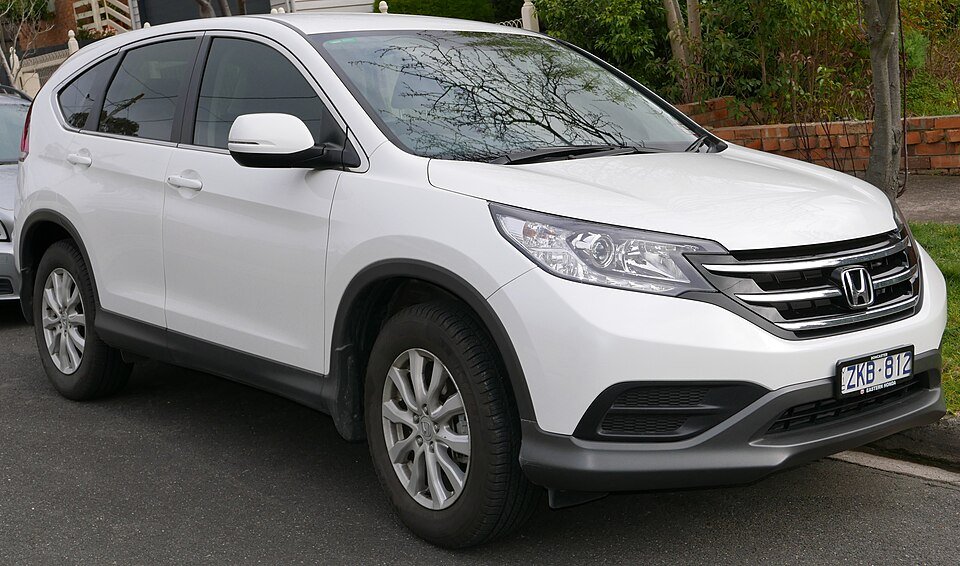
Honda CR-V (2012 model shown). Photo: Wikimedia Commons (see the file page for author and licence).
Why a Careful Check Matters
Almost every CR-V on the Nigerian market is a used import, either “Nigerian used” or “foreign used”. Each one has a different history. Some were gently driven and serviced on time. Others were crashed, flooded or neglected and then cleaned up for sale. A good model name does not guarantee a good car, so the individual vehicle matters more than the badge.
Common Honda CR-V Problems to Look For
1. Air conditioning
Weak cooling is one of the most often reported complaints on used CR-Vs. In Nigeria’s heat, the AC works hard. Causes range from a low gas charge and leaks to a worn compressor or a blocked condenser at the front of the car.
Run the AC on full for at least ten minutes. It should blow properly cold, not just cool.
Listen for loud rattling or squealing when the compressor switches on.
Check that the cooling fans come on and that the car does not overheat while the AC is running.
2. Suspension and bushings
Our roads are tough on suspensions. Worn bushings, links, shock absorbers and ball joints are common on used SUVs here, and the CR-V is no exception.
Listen for knocking or clunking over bumps and potholes.
Watch for the car pulling to one side or the steering wheel shaking at speed.
Look at the tyres. Uneven wear on the edges often points to alignment or suspension problems.
Press down on each corner of the car. It should rise once and settle, not keep bouncing.
3. Transmission and AWD system
Automatic gearboxes need clean fluid and regular servicing. Many owners skip this, and that is where trouble starts. On AWD versions, the rear drive system also needs its own fluid changes.
Gear changes should be smooth. Jerks, delays, flaring revs or a harsh drop into gear are warning signs.
Ask when the transmission fluid was last changed and whether there is proof.
On AWD cars, listen for groaning or humming from the rear when turning slowly in a tight circle.
Check that all four tyres are the same brand, size and similar wear, because mismatched tyres can strain the drivetrain.
4. Oil consumption and leaks
Some CR-V engines are reported to use more oil than expected as they age, and valve cover or other gaskets can leak. These are usually manageable, but you should know about them before you pay.
Check the oil level and colour on the dipstick. Very low, black and gritty, or milky oil is a bad sign.
Look under the car and around the engine for fresh wet patches.
Ask the seller how often the oil is topped up between services.
Look for blue smoke from the exhaust at start-up and when accelerating.
The pedal should feel firm, not spongy or sinking.
Squealing, grinding or a pulsing pedal can mean worn pads or warped discs.
The car should stop in a straight line without pulling to one side.
6. Electrics
Modern SUVs have many small electrical parts, and faults can be annoying even when they are not expensive. Test everything: power windows, central locking, mirrors, sunroof if fitted, radio, reverse camera, wipers, all lights and every warning light on the dashboard. All warning lights should come on when you turn the key and go off after the engine starts. A bulb that never lights may have been removed to hide a fault.
7. Rust and accident repairs
Many cars arrive with a previous crash, and a good repair is not always a deal-breaker. A poor repair is. Look for:
Uneven panel gaps and doors that do not close evenly.
Paint that looks different in colour or texture from one panel to the next.
Overspray on rubber seals, trim or under the bonnet.
Rust or damp in the boot floor, door bottoms, wheel arches and under the carpets. Musty smells and damp carpets can mean flood damage.
Bent or freshly welded chassis rails visible under the car.
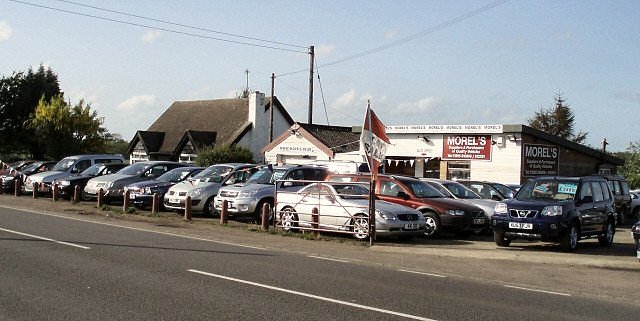
Used cars on a dealer lot. Always inspect each vehicle individually. Photo: Wikimedia Commons (see the file page for author and licence).
Simple Inspection Checklist
Check the chassis number against the documents and the car itself.
Inspect the car in daylight, on a dry day, and with a cold engine.
Open the bonnet and look for leaks, cracked hoses, a dirty or wrongly filled coolant tank and recently cleaned engine areas that may hide leaks.
Check all tyres, including the spare, for wear and age.
Look at the seat, steering wheel and pedal wear. They should match the claimed condition and mileage.
Drive for at least 20 to 30 minutes on a mix of roads: slow traffic, a rough patch and a faster stretch if possible.
Start the engine cold and listen for rough idling or unusual noises.
Accelerate gently and firmly and feel the gear changes.
Brake hard once, safely, when the road is clear.
Drive over a bumpy surface with the radio off and listen for knocks.
Let go of the steering wheel briefly on a straight, empty road to see whether the car drifts. Do this carefully.
Park, leave the engine running and watch the temperature gauge and AC performance.
Questions to Ask the Seller
How many owners has it had, and why are you selling?
Do you have service records or receipts, especially for transmission and oil changes?
Has it been in an accident, repainted or flooded?
Are the customs papers and registration documents complete and genuine?
Has anything major been replaced recently, such as the AC compressor, gearbox parts or suspension?
Vague answers, pressure to decide fast or a refusal to let a mechanic inspect the car are warning signs on their own.
Cost of Ownership in General Terms
A CR-V is usually easier on fuel than a larger SUV, and parts are widely available in Nigeria. Still, budget beyond the purchase price. Set aside money for a full service after you buy, tyres, brake parts, suspension work and an AC check. A car that looks cheap but needs several repairs can cost more than a better one at a higher price. Regular servicing, including transmission and AWD fluids, is the best way to keep running costs predictable. For official model information, you can visit Honda’s official website.
The seller will not allow an independent inspection.
Documents are missing, unclear or do not match the car.
There are signs of flood damage, such as damp carpets, silt or a musty smell.
The gearbox slips, jerks or shudders.
The engine overheats, smokes heavily or has milky oil.
There is evidence of serious structural repair.
The price is far below similar cars with no clear reason.
There are plenty of CR-Vs for sale. Walking away from a bad one costs you nothing.
Frequently Asked Questions
Is the Honda CR-V reliable in Nigeria?
It has a reputation for being reliable when properly maintained. Reliability depends heavily on the individual car’s history and servicing, so inspect each one carefully.
What is the most common problem on a used CR-V?
Buyers often report air conditioning faults and worn suspension parts. Transmission care and oil leaks are also worth checking, particularly on older cars.
Should I take a mechanic with me?
Yes. A mechanic who knows Hondas can spot problems you may miss, and the inspection fee is small compared with a major repair bill.
Conclusion
A used Honda CR-V can be a sensible family SUV for Nigerian roads, as long as you buy the right one. Check the AC, suspension, gearbox and AWD, engine oil, brakes, electrics and body condition. Take a proper test drive, ask direct questions and be ready to walk away. A careful inspection now can save you a lot of money later.
A hybrid car battery can last many years, but age, heat, use and care all matter. Learn the warning signs and how to check a used hybrid before you buy in Nigeria.
Thinking of buying a used RAV4? Here are the Toyota RAV4 problems often reported, what to inspect, how to test drive, and when to walk away in Nigeria.
Vehiclespot.ng is a leading car dealer in Nigeria, offering an innovative online automobile marketplace that connects buyers and sellers effortlessly. In addition to buying and selling vehicles, we provide a range of auto services designed to meet all your automotive needs.