Most roadside breakdowns have a boring cause: a fluid that was low and nobody checked. A five-minute check, done monthly, can save you thousands of naira and a lot of stress. This guide shows how to check the main fluids safely.
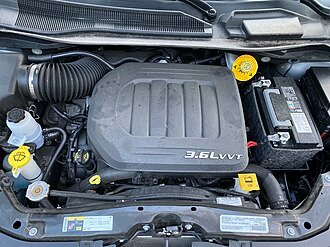
An open engine compartment. Photo: Wikimedia Commons (see the file page for author and licence).
Before you start
AAA advises parking on level ground, not overfilling (too much fluid can be as harmful as too little), wiping around dipsticks and caps before opening them, and using only fluids that meet the maker’s specification in the owner’s manual. Never open a hot radiator cap.
Engine oil
Park on level ground with the engine off and cold.
Pull the dipstick, wipe it, reinsert it fully and pull it out again.
If the level is at or below the lower mark, add oil to reach the upper mark.
Find the translucent reservoir near the radiator and check the level against the marks. If it is below the lower mark, add coolant, but do not go above the mark. A coolant level that keeps dropping needs a mechanic. See car overheating: causes and what to do.
Brake fluid
The reservoir sits on top of the master cylinder at the rear of the engine bay, on the driver’s side in many cars. The level should lie between the marks. AAA says that if it is near or below the lower mark, have a shop inspect the brake system for wear or leaks as soon as possible. Read when to replace brake fluid.
Automatic transmission fluid
Many cars check it with the engine warm and running, following the manual’s gear-cycling steps. Some cars have sealed transmissions with no dipstick, which need special procedures, so ask a technician. See checking a used car’s transmission.
Power steering and washer fluid
Check the power steering reservoir level against its marks if your car has a hydraulic system, and fill the washer reservoir to the top. Many newer cars use electric steering with no fluid.
When to see a mechanic
A fluid needs frequent topping up. AAA advises having a repair shop inspect the car in that case.
Brake fluid absorbs moisture and loses effectiveness over time. Learn how often to replace it, what a spongy pedal means and why old fluid is a safety risk.
Hybrids still have engines, so most servicing is familiar, but brakes, batteries and cooling differ. Here is what changes and who should service your hybrid.
Level 1, Level 2 and DC fast charging differ hugely in speed and cost. Understand them before you buy an electric car or install a home charger in Nigeria.
Vehiclespot.ng is a leading car dealer in Nigeria, offering an innovative online automobile marketplace that connects buyers and sellers effortlessly. In addition to buying and selling vehicles, we provide a range of auto services designed to meet all your automotive needs.