The quickest way to check a used car’s transmission is to test drive it from a cold start, shift through every gear position, watch for delays, slipping or harsh jerks, look at the transmission fluid, and scan for fault codes. If anything feels wrong, get a mechanic to look before you pay. A gearbox repair can be one of the most expensive jobs on a car, so these few minutes are worth taking seriously.
This guide is written for buyers of automatic cars, including tokunbo and Nigerian-used vehicles. You do not need to be a mechanic. You only need to know what normal looks like and what should make you pause.
Why the transmission deserves extra attention
The transmission passes power from the engine to the wheels. When it is in good shape, you hardly notice it. When it is failing, repairs are often costly, and a tired gearbox can be hidden for a short while by a seller who only wants to close the deal. Many automatic cars on our roads use either a conventional automatic or a CVT (continuously variable transmission), and each can show trouble in slightly different ways.
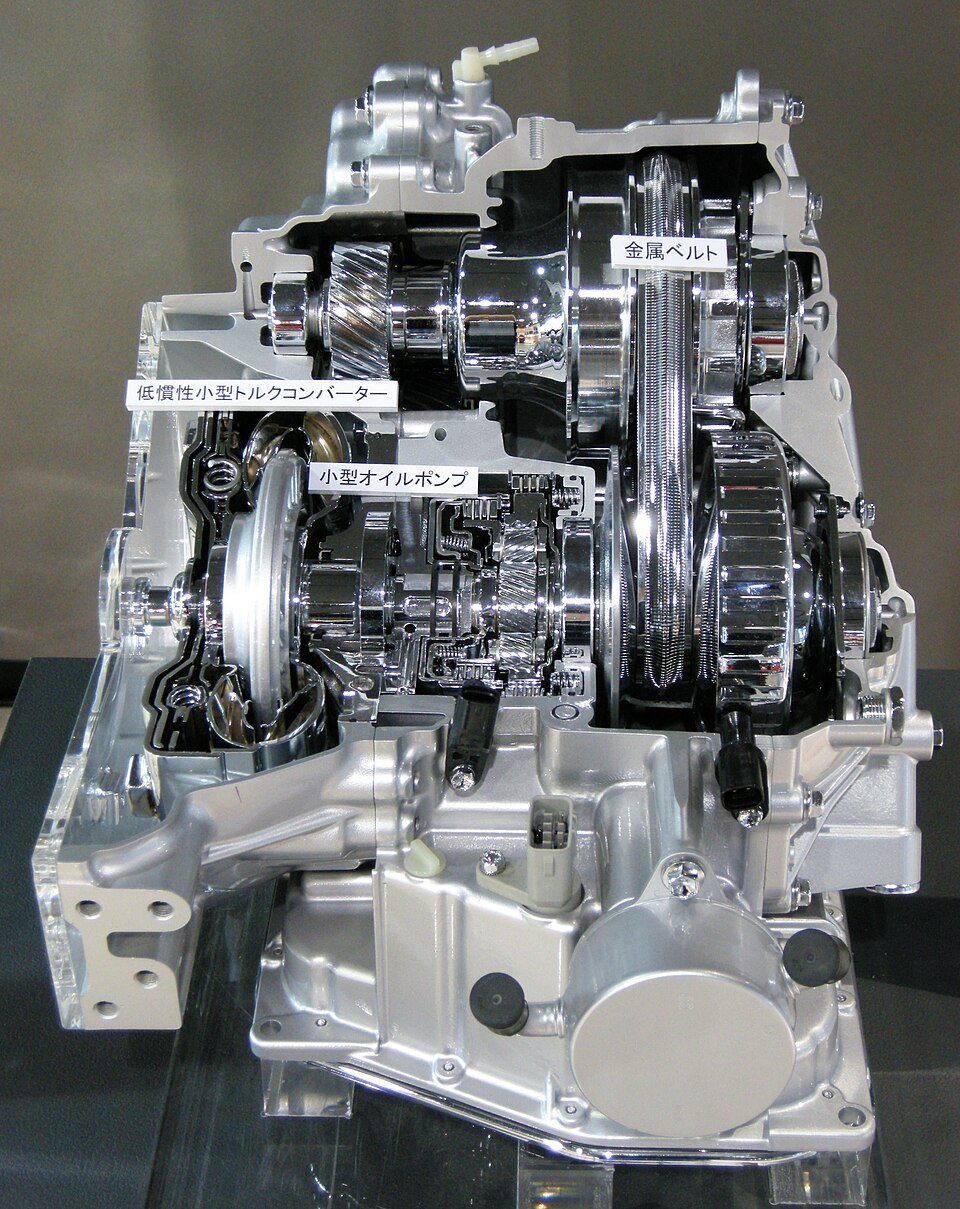
A cutaway of a CVT-type automatic transmission. Many modern cars use this design. Photo: Wikimedia Commons (see the file page for author and licence).
Before the test drive: what to do first
1. Ask for the car to be cold
Ask the seller not to start the car before you arrive. A warm engine can hide hard starting, rough idle and some gearbox behaviour. Touch the bonnet when you arrive. If it is already warm, that is worth noting, and you can politely ask why.
2. Look under the car
Check the ground where the car was parked. Fresh reddish, brown or dark oily spots can mean a leak. Not every stain is from the transmission, since engine oil and power steering fluid can also drip, but a leak is a reason to ask questions.
3. Check the transmission fluid, if the car allows it
Some cars have a dipstick for transmission fluid, while many newer ones are sealed and need a mechanic to check. If there is a dipstick, follow the owner’s manual for the correct procedure, because many cars must be checked with the engine running and warm. Generally, healthy fluid looks fairly clear and reddish or pinkish, and has a mild smell. Be careful if you see:
Dark brown or black fluid
A strong burnt smell
Metal specks or a milky look
Fluid colours differ between brands, so treat this as a clue and not a final verdict. If the car has a sealed transmission and the seller says “it never needs service”, do not simply accept that. Ask for service records.
Step-by-step test drive
Step 1: Cold start
Turn the key or press the button and listen. The engine should start without long cranking, loud knocking or heavy smoke. Watch the dashboard. Warning lights usually come on briefly and then go off. Any light that stays on deserves attention.
Step 2: Shift through P, R, D and N while parked
With your foot on the brake, move the lever slowly from Park to Reverse, then to Neutral and Drive. Each move should engage within a moment, with only a soft, gentle push. Be wary if:
There is a long pause before the car “catches” gear
You feel a hard clunk or bang
The car shakes strongly when selected into gear
A very short delay can be normal on some cars, but a long or repeated delay is a warning.
Step 3: Drive gently first
Pull away slowly. The car should move off smoothly. Then accelerate gradually and feel how the gearbox changes gears. On a conventional automatic, shifts should generally be smooth and almost unnoticeable. Jerking, flaring (the engine revs rising without the car speeding up) or bangs are signs of trouble.
Step 4: Drive with more throttle
On a safe, open road, accelerate a bit harder. The car should respond without the revs shooting up and the speed lagging behind. That “revs go up but the car does not follow” feeling is often called slipping, and it is one of the clearest warning signs.
Step 5: Test stop-and-go conditions
Go through slow traffic or try low-speed driving if you can. Lagos-style traffic is a real test, since constant stopping and starting stresses the gearbox. Notice any shudder, vibration or hesitation at low speed.
Step 6: Check for CVT shudder and whine
If the car has a CVT, pay attention to how it pulls away. Some CVT cars shudder or judder when moving off, feel rubbery, or make a whining noise that rises with speed. A smooth CVT should feel steady, without vibration or sudden surges. Some quiet whine can be normal on certain models, but shaking, jerking or noise that seems to be getting worse is not something to ignore. If it is a Toyota, our guide on common Toyota transmission problems explains what owners often report.
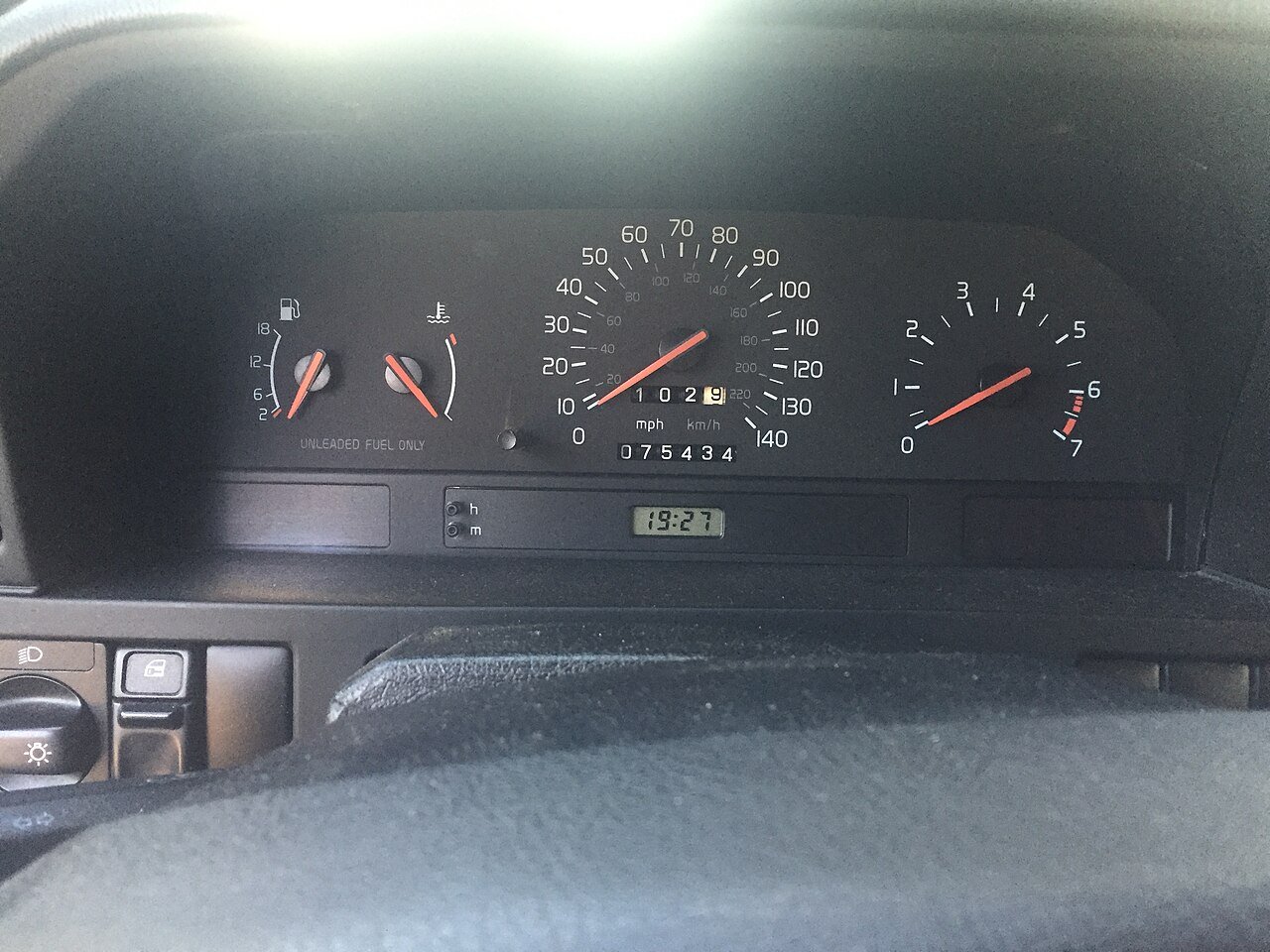
A dashboard with its warning lights. Any warning light that stays on while driving deserves attention. Photo: Wikimedia Commons (see the file page for author and licence).
Step 7: Try a hill, and reverse
If there is a slope nearby, drive up it and stop on it. The gearbox should hold without struggling. Reverse the car a short distance and listen for grinding or whining. Also test the manual or sport mode if the car has one, to see that it responds.
Step 8: Check the warning lights and scan
After driving, look at the dashboard again. A check engine light, a transmission or gear symbol, or flashing lights should be explained by the seller. Better still, use an OBD scanner, which many mechanics and auto electricians have. It can read stored fault codes. Be aware that codes can be cleared before a sale, so a clean scan does not prove the gearbox is healthy. It is just one more piece of information.
Step 9: Look again for leaks
After the drive, park on a clean patch and wait a few minutes. Look underneath again for fresh drips. Also check the fluid again if the car has a dipstick.
Signs of transmission trouble
Taken together, these are the common warning signs:
Delay or hesitation when shifting into Drive or Reverse
Slipping, where the revs rise but the car does not accelerate properly
Harsh, jerky or banging gear changes
Shuddering at low speed, especially on CVT cars
Whining, grinding or clunking noises
Burnt-smelling or very dark fluid
Fluid leaks under the car
Transmission or check engine warning light
The car staying in one gear or going into “limp mode”
One small sign does not always mean a failed gearbox, but several together are a good reason to walk away or negotiate carefully.
What to ask the seller
Has the transmission fluid ever been changed, and when?
Are there service records or receipts?
Has the gearbox ever been repaired or replaced?
How was the car used: mostly city traffic, long trips, or towing?
Why are you selling it?
Can I take it to my own mechanic for an inspection?
Pay attention to how the seller answers. A genuine seller usually does not mind these questions or an independent inspection. If someone refuses a mechanic check, becomes defensive or keeps rushing you, that is worth noticing.
When to bring in a mechanic
You should bring a trusted mechanic whenever you are serious about a car, especially if the price is high or the car is imported. Choose someone you trust yourself, not someone recommended only by the seller. Ask them to check the gearbox on a lift, scan the car, and look at the engine as well. Our guide on how to check a used car’s engine before buying pairs well with this one, and the used car inspection guide covers the rest of the car.
If you are buying a foreign-used car, also read how to buy a tokunbo car in Nigeria without getting scammed. Imported cars can look clean outside while having a history you cannot easily see. For general information about how a particular model is meant to be maintained, the manufacturer’s own website, such as Toyota, can be a useful reference, and your owner’s manual is even better.
Frequently asked questions
Can I tell if a transmission is bad from a short test drive?
Often you can spot obvious problems such as slipping, harsh shifts or long delays. But a short drive cannot reveal everything. Some faults appear only when the car is hot or under load, so a mechanic’s inspection is still wise.
Is a CVT worse than a normal automatic?
Not necessarily. Many CVT cars run well for years when maintained properly. The point is that they depend heavily on correct fluid and service history, so ask for records and test the car carefully for shudder or whining.
Should I buy a car if the transmission fluid is dark?
Dark fluid is a warning but not a guaranteed failure. It may simply mean the fluid is old. Combined with a burnt smell, rough shifting or metal particles, though, it is a good reason to walk away or ask a mechanic for advice before paying.
Conclusion
Checking a used car’s transmission does not need special tools. Start the car cold, move through every gear position, drive gently and then harder, notice any delay, slipping, jerking or shudder, inspect the fluid and look for leaks. Ask the seller direct questions, and bring a trusted mechanic if you are serious. A calm, careful check can save you from an expensive repair, and if the car does not pass, there will always be another one.
Is a used Honda Accord a smart buy on Nigerian roads? This guide covers reliability, common problem areas, engine choices and a practical inspection checklist.
Finding a trustworthy car mechanic in Nigeria takes a little homework. Here is how to choose one, what to ask, which warning signs to watch for and how to avoid fake parts.
Thinking of a used Range Rover in Nigeria? Here is an honest look at why people love them, what ownership really involves, how to inspect one and who should look elsewhere.
Vehiclespot.ng is a leading car dealer in Nigeria, offering an innovative online automobile marketplace that connects buyers and sellers effortlessly. In addition to buying and selling vehicles, we provide a range of auto services designed to meet all your automotive needs.